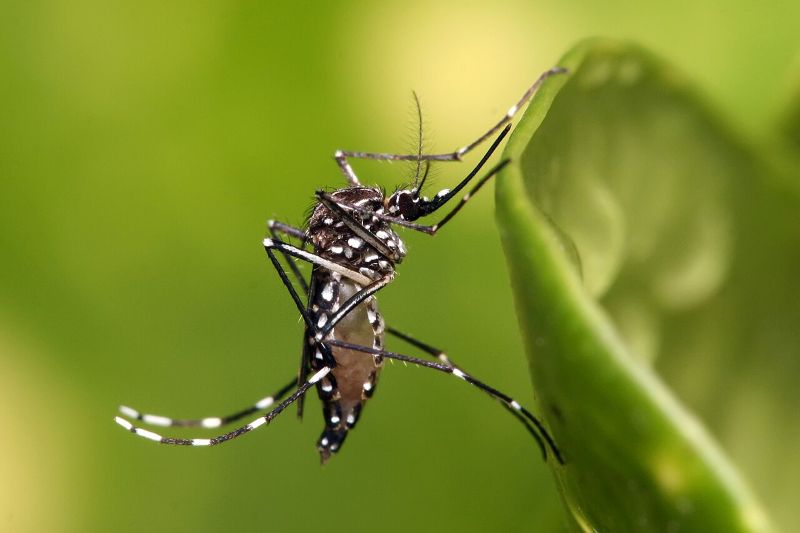
Invasive Aedes Aegypti Mosquito Identified in Boulder Creek
Santa Cruz County Mosquito & Vector Control (Vector Control) has announced the detection of invasive Aedes aegypti mosquitoes near downtown Boulder Creek, marking the second confirmed sighting in the county. This follows a 2022 identification in the South County area. The discovery underscores the ongoing challenge of managing non-native mosquito species in California, where Aedes aegypti is not endemic but poses significant public health risks due to its ability to transmit serious diseases.
Aedes aegypti, often called the “yellow fever mosquito,” is a small, aggressive species measuring about ¼ inch in length, characterized by its black-and-white striped appearance. Unlike many local mosquitoes that bite at dusk or dawn, this species is a daytime biter, making it particularly intrusive during outdoor activities. It has the potential to spread dengue, chikungunya, Zika virus, and yellow fever through its bites. While these diseases are not yet widespread in California, the threat is real: in 2024, local dengue cases were reported in Los Angeles and San Diego counties, highlighting the importance of rapid containment. The Boulder Creek finding has been officially confirmed by the California Department of Public Health (CDPH).
Drawing from the successful containment efforts after the 2022 Watsonville detection – where the mosquito was eradicated from the area without further sightings – Vector Control has launched a multi-pronged strategy in Boulder Creek. Expanded surveillance includes deploying specialized traps designed to capture adult Aedes aegypti mosquitoes, as well as water sampling to detect larvae in the surrounding downtown area. Field staff are also conducting door-to-door inspections of residential and commercial properties to identify and eliminate potential breeding sites. Recent rains combined with warm temperatures have created ideal conditions for mosquito proliferation.
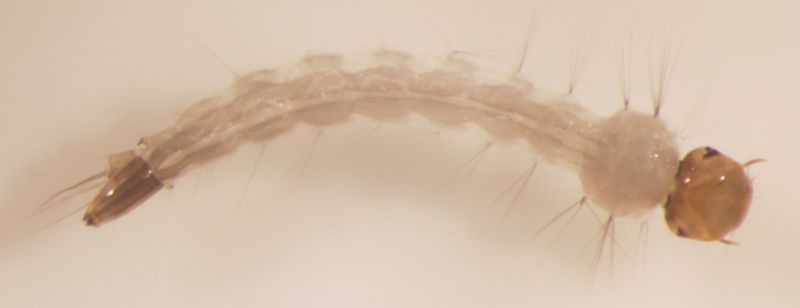
Aedes aegypti larva
Aedes aegypti thrives in urban and suburban environments, laying eggs just above the water line in tiny, artificial containers that collect even small amounts of standing water. Common breeding hotspots include saucers under potted plants, bird baths and feeders, ornamental fountains, tin cans, discarded children’s toys, and old tires. Residents are urged to eliminate these sources by dumping out all standing water on their properties, no matter how minimal. Because the eggs adhere stubbornly to surfaces, it’s essential to clean items like bird baths and pet watering dishes regularly, and to empty overflow trays from potted plants. These simple actions can dramatically reduce breeding opportunities and halt the spread.
To further protect against bites, Vector Control recommends practical precautions:
- Apply EPA-registered insect repellents containing active ingredients like DEET, picaridin, oil of lemon eucalyptus, or IR3535 to exposed skin and clothing, following label instructions.
- During peak mosquito activity – typically daytime – opt for long-sleeved shirts, long pants, socks, and shoes.
- Ensure window and door screens are intact and well-maintained to keep mosquitoes out of homes.
Anyone experiencing unusual daytime mosquito bites should report them promptly to Vector Control via the online “Submit a Service Request” form at mvc.santacruzcountyca.gov or by calling (831) 454-2590. This helps map infestation hotspots and direct resources effectively. Additionally, if you’ve recently traveled to regions where dengue, chikungunya, or Zika are prevalent and develop symptoms such as fever, headache, or joint/muscle pain, seek medical attention immediately and minimize outdoor time to avoid biting mosquitoes, thereby preventing potential local transmission.
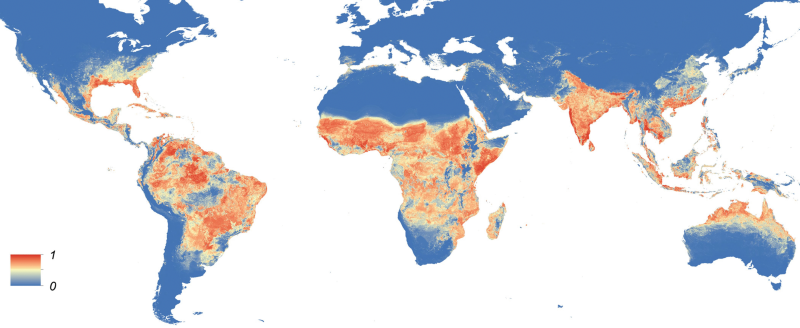
Global map of the predicted distribution of Aedes aegypti in 2015. The map depicts the probability of occurrence (from 0 blue to 1 red) at a spatial resolution of 5 km × 5 km.
For more details on Aedes aegypti and prevention strategies, visit the Santa Cruz County Mosquito & Vector Control website at mvc.santacruzcountyca.gov/Learn/InvasiveAedes.aspx or the CDPH page at cdph.ca.gov/Programs/CID/DCDC/Pages/Aedes-aegypti-and-Aedes-albopictusmosquitoes.aspx.

The San Lorenzo Valley Post is your essential guide to life in the Santa Cruz Mountains. We're dedicated to delivering the latest news, events, and stories that matter to our community. From local government to schools, from environmental issues to the arts, we're committed to providing comprehensive and unbiased coverage. We believe in the power of community journalism and strive to be a platform for diverse voices.