Green Tea and Honey Jun
Crafting a Maui Inspired Kombucha Style Beverage
By Tom Andersen
Yes indeed you can make a kombucha style beverage with green tea and honey as the sugar. It’s called “Jun,” possibly derived from the Chinese word for pure, some say Tibetan origins. Unfortunately, as I discovered, honey is a pretty good antiseptic and antimicrobial. Needless to say, it killed one of my SCOBYs. (SCOBY is an acronym for symbiotic culture of bacteria and yeast.) Oh, so sad. Good thing I have a jar full. I’d given up on it for a while, but chatting away with my retired chef friend and current boxing instructor, I learned it requires a special SCOBY that eats honey. It’s called a “Jun bug” (don’t even think it). Anyway, I set it aside for a future experiment.
Meanwhile, after a blissful 33 year courtship, I proposed, she said yes (whew!), and we had a really fun honeymoon on Maui. On an excursion “Upcountry” we went to the local farmer’s market. Wouldn’t you know it, there was a Jun refreshment stand — Owner Taryn Leigh’s Maui Jun Company. I of course tried all the flavors and struck up a conversation with Taryn. She confirmed the power of the honey to destroy my regular SCOBY. Jun SCOBYs are available, but it is possible to convert one that will thrive on honey. I decided on the Lilikoi Ginger Turmeric flavor and bought a quart. She dispensed it with a commercial soda dispenser so it was very fizzy like champagne — outstanding! Taryn said, “We use raw Hawaiian honey instead of cane sugar in order to ferment. And what that does is it produces a product that is really delicate on the palate, non vinegary, and it allows me to play around with flavor combinations.”
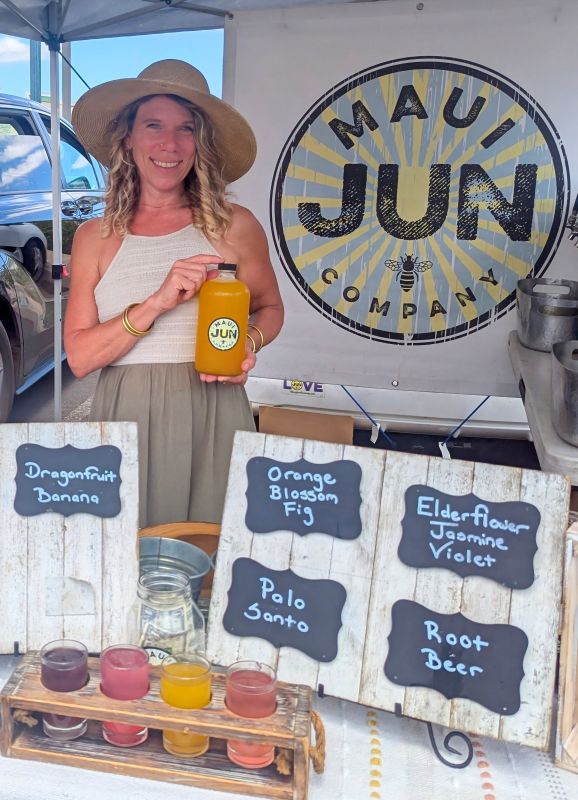
Maui Jun Company’s proprietor, Taryn Leigh, shares her delicious Jun at Maui’s Upcountry Farmers Market.
Jun is quite a bit lighter than regular kombucha and is less acidic. It ferments a little faster and is also easily flavored after it ferments. It should be noted that Jun is closely related to kombucha but isn’t identical. Both are fermented, effervescent drinks made with a SCOBY, but Jun uses green tea and honey as its base, while kombucha typically uses black tea and sugar. Jun has quite a controversial history with some believing it is ancient and has only one original SCOBY with others believing it is a modern derivation with a specialized SCOBY. Personally, I don’t care. It is, though, a pretty good drink.
Maui Jun’s kombucha is only available in the islands. So with a revived inspiration and much appreciated education, I came home with a mission — convert a SCOBY.
Felton Jun
I know how to kill one so let’s not do that again. Taking a tip from Darwin, a few generations can produce huge changes. I managed to convert one in four generations. Here is how I did it.
First I made 4 cups of Sencha green tea using only one tea bag. I let it cool a few minutes then added ¼ cup of raw, unfiltered honey. As I always recommend, keep it local. Find a beekeeping friend and make a trade or just spend the money, but get the good stuff. Next, I made a full batch of regular black tea Kombucha. That would be 16 cups of water and 8 tea bags with one cup of regular sugar. I let it cool to roughly 80 degrees and mixed the two together in a two gallon wide mouth container. I used a two gallon primary fermentation bucket. I added a regular SCOBY pellicule coveringing it with a cloth — air in, bugs out. I crossed my fingers and let it go for a week without messing with it. Sure enough, it made a new SCOBY. Well at least it didn’t die.
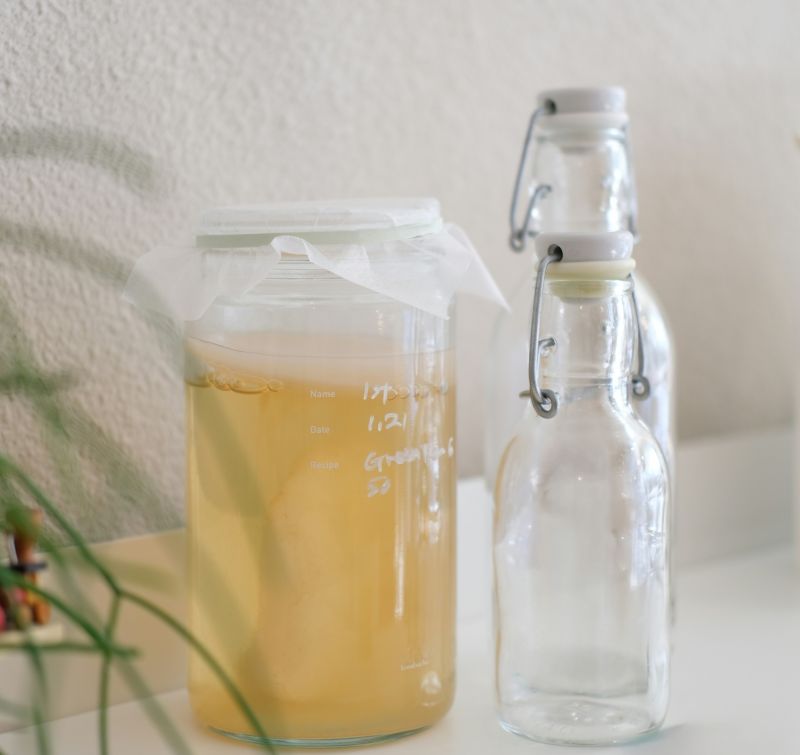
Step two, I made the same amount of green tea and honey base. But, I cut the black tea part in half. That would be 8 cups of water, 4 tea bags, and ½ cup of sugar. I used that new pellicule glob and let it go for a week. I’ll be darned if it didn’t work again!
For the third generation, I did the same. I made the same amount of green tea and honey tea then 4 cups of water, two black tea bags and ¼ cup of regular sugar. I was now able to use a one gallon wide mouth container. I used the new SCOBY and let it ferment for about a week and a half to develop a good strong glob (and I sort of forgot about it). This batch had a distinctly different flavor — definitely getting there.
Finally, I made the full power Jun. I used 8 cups of water, 2 Sencha tea bags and ½ cup of good raw honey. My SCOBY had gotten huge so I cut it in half. A week later I had a pretty good drink, so I made another one. Excellent — repeatability. It wasn’t as carbonated as I had expected, so I added ¼ cup of my ginger bug (see my April 2023 article) to the whole batch and bottled it in repurposed soda bottles. In a couple days, it had some pressure. Not bad, not bad at all. It took a little time and some excellent biology, but I’m pretty happy with this one.
If you’d like to flavor your Jun, add your flavorings after it is completely fermented and you’ve pulled out the SCOBY. So use your imagination and come up with some tasty combinations.
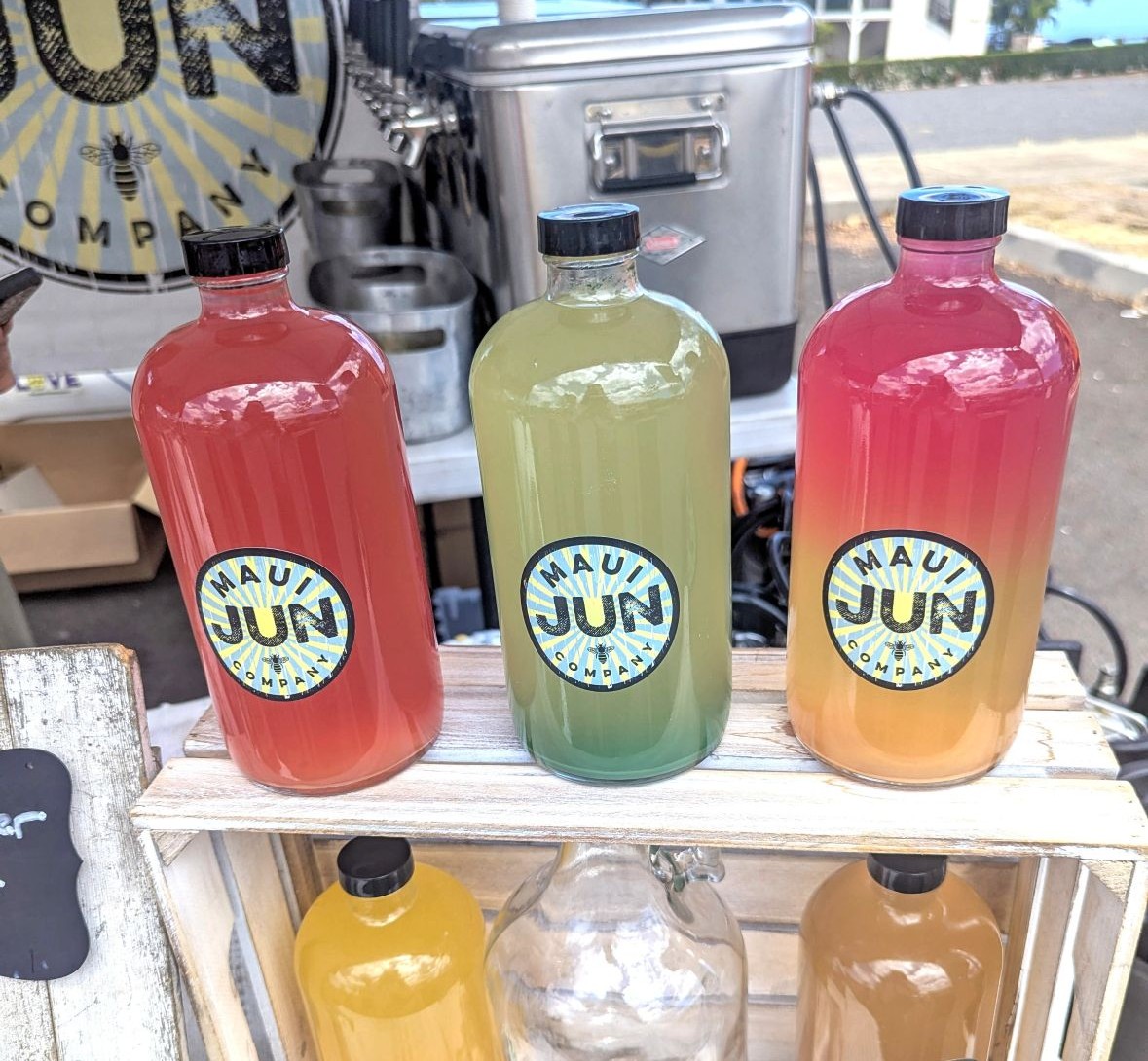
Featured photo at top of page: Maui Jun Company’s flavors include Root Beer, Orange Cream Soda, Elderflower Jasmine Violet, Orange Blossom Fig, Lilikoi Ginger Turmeric, Dragonfruit Banana, Palo Santo, Chocolate Rose Chaga, Cucumber Spirulina, and Strawberry Jasmine Damiana.
(Photos by Mary Andersen)

Thomas Andersen
Tom Andersen is a writer, cook, martial arts instructor and lifelong Felton resident. He explores the world of fermented food and drinks in print and online. Tom lives in Felton with his family and many pets. He is currently working on a cookbook about fermentation.