New California law will Ban watering nonfunctional grass beginning Jan. 1, 2027
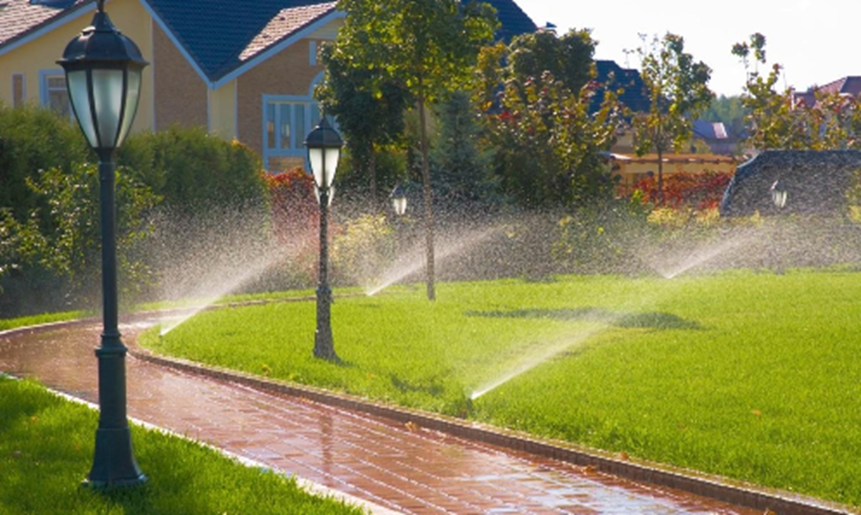
California has banned using treated drinking water to water grass that nobody actually uses, including the decorative strips around parking lots, office buildings, and street medians on non-residential properties. Your own yard is not affected.
The state is adapting to a drier, hotter climate by making systemic changes to save more water, and the ban aims to eliminate using drinking water for something people do not directly use, which saves water for other beneficial uses and also saves the energy that would otherwise go into treating water to drinking water standards.
What counts as “nonfunctional” grass
“Functional” turf is mowed grass in a recreational or community space, areas such as soccer fields and park areas where people gather. Anything else is nonfunctional: grass in street rights-of-way and parking lots, or grass fenced off so people can’t walk on it.
Two important limits: the law doesn’t require anyone to rip out grass. It only bans watering it with drinking water, and it doesn’t restrict watering trees or other non-grass plants. Recycled or non-potable water is still fair game. Cemeteries are exempt.
Who it applies to
Commercial, industrial, and institutional properties, HOAs, common interest developments, and community service organizations. Residential properties are not covered, including homes inside an HOA. But the HOA’s shared common areas are covered.
When it takes effect
| Deadline | Who |
|---|---|
| Jan 1, 2027 | State Dept. of General Services properties; local governments, public agencies, and public water systems (outside disadvantaged communities) |
| Jan 1, 2028 | Commercial, industrial, and remaining institutional properties |
| Jan 1, 2029 | HOAs, common interest developments, community service organizations |
| Jan 1, 2031 (or later) | Public properties in disadvantaged communities — whichever is later, that date or when state lawn-conversion funding becomes available |
The State Water Resources Control Board can also push an individual owner’s deadline back up to three years for economic hardship, critical business need, or health and safety impacts, though the process for requesting that hasn’t been published yet.
Larger properties have to file paperwork proving compliance. If you have more than 5,000 square feet of irrigated area (or irrigated common area, for an HOA), you self-certify to the State Water Board — June 30, 2030 for commercial/industrial/institutional, June 30, 2031 for HOAs and similar — then every three years after. Those certifications will be posted publicly.
And if you’re unsure whether a particular patch counts as functional, the State Water Board says to ask your local water district. Water districts have until January 1, 2027 to update their own rules and tell customers what’s required. Enforcement comes from water systems, cities, and counties.
The sustainability angle
Important to note: the law bans a water source, not the grass. So commercial entities have other paths — change what you irrigate with, or change what’s growing there.
Change the water source
Recycled water is fully compliant. If your property is near a purple-pipe distribution line, connecting can let you keep turf as-is. This is the least disruptive option where it’s available, though the connection cost and the utility’s service area are the constraints. Rainwater capture and stormwater retention also work, and on larger sites they can pull double duty toward stormwater permit requirements.
Convert the landscape
Sheet mulching (cardboard, compost, mulch over the existing grass) is the low-cost method the Water Board links a DIY video for. No excavation, no herbicide, and the decomposing turf feeds the new bed. Then plant Mediterranean-climate and California native species, which in most of the state need supplemental water only during establishment and occasionally after.
The failure mode would be ripping out grass and laying down gravel or artificial turf. Both raise surface temperatures substantially, gravel does nothing for stormwater infiltration, and synthetic turf carries PFAS and end-of-life disposal problems that a few California jurisdictions have started restricting. Planted beds with organic mulch avoid all of that and are usually cheaper than synthetic anyway.
Make some of it functional instead
The exemption for recreational and community-use turf is a design opportunity. A lawn panel that gets a seating area, shade, and a path through it becomes a space employees or visitors actually use. And functional turf can keep being irrigated with potable water. This works well for the courtyard-scale patches while the parking lot medians and sign surrounds get converted.
The ban doesn’t restrict watering trees or other non-grass plantings, and mature canopy is the single most valuable thing on most commercial sites for shade and cooling.
More information: waterboards.ca.gov/conservation/nonfunctional-turf.html

The San Lorenzo Valley Post is your essential guide to life in the Santa Cruz Mountains. We're dedicated to delivering the latest news, events, and stories that matter to our community. From local government to schools, from environmental issues to the arts, we're committed to providing comprehensive and unbiased coverage. We believe in the power of community journalism and strive to be a platform for diverse voices.