Before the Rains Come: A Mountain Homeowner’s Late-Summer Checklist
Here in the Santa Cruz Mountains, September is an interesting in-between season.
The hills are dry, fire season is still very much on our minds, and yet those of us who have lived here for a while know that the first real rains can arrive before we’ve gotten around to everything on our list. That makes September one of the best times of year to walk around your property and look at it with winter eyes.
There may be another reason to take that September walk around the property a little more seriously this year.
NOAA is currently forecasting a greater than 90 percent chance of a very strong El Niño during the coming fall and winter. That doesn’t mean anyone can predict exactly how much rain we’ll receive here in the Santa Cruz Mountains — El Niño winters can vary considerably — but it gives us one more reason to be prepared.
And around here, it’s often the cumulative rainfall that matters.
Our rainy season can get underway in October, with some of our wettest months typically arriving in the heart of winter. By January and February, after repeated storms, the ground can become thoroughly saturated. That’s when drainage problems, erosion, unstable slopes and stressed trees can become much more consequential.
So this year especially, September is a good time to ask a simple question: when the rain comes, where is all that water going to go?
After years of selling homes and land throughout the mountains, I’ve learned that water has an amazing ability to find the one thing you forgot to maintain. A clogged culvert. A gutter overflowing in exactly the wrong spot. A downspout dumping water against the foundation. A drainage ditch that filled with leaves and debris over the summer. A sump pump that hasn’t been tested since last winter. None of these sounds particularly dramatic on a sunny September afternoon. Add several inches of rain, though, and suddenly they can become very expensive problems.
Drainage
Mountain properties are all about drainage. Walk your property and look uphill as well as downhill. Where will water naturally travel? Are your drainage swales clear? Are culverts open? Where do your downspouts discharge? Is there anywhere water could be directed toward your foundation, driveway, retaining wall or septic system?
If you share a private road, this is also a good time to look at roadside drainage. One plugged culvert upstream can sometimes create problems for several properties downstream.
Look up, too
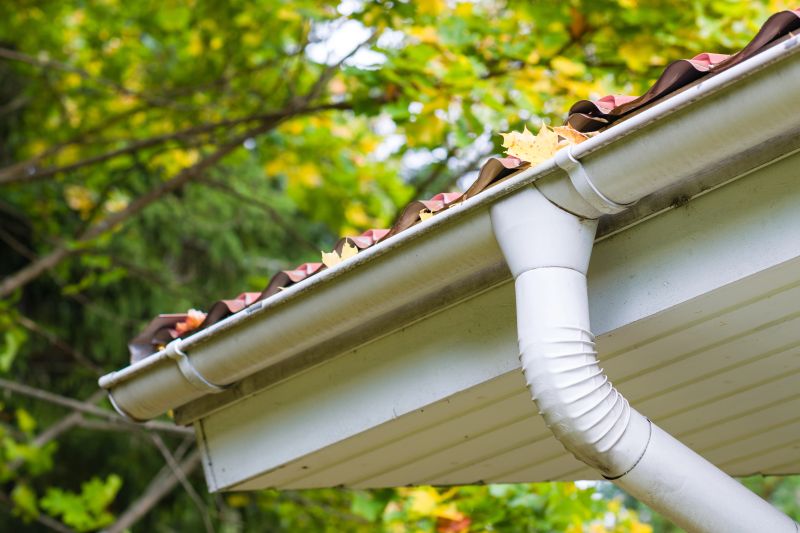
Roofs and gutters take a beating under our redwoods, oaks, firs and other mountain trees. Leaves, needles and branches accumulate surprisingly quickly.
Cleaning that debris serves two purposes this time of year: it prepares your roof and gutters for rain while also removing combustible material during fire season. Check for loose or damaged roofing, overflowing or disconnected gutters, and tree limbs touching or hanging over the house. If you have a chimney, take a look at that area as well.
Pay attention to decks, siding and exterior wood
Our beautiful mountain environment is not particularly gentle on wood. Shade and moisture can lead to rot, while sun exposure dries and cracks finishes. Look underneath decks and stairs, around door thresholds and windows, and anywhere wood meets soil.
These are also exactly the kinds of things that tend to appear on a pest or home inspection when a property goes on the market.
Which brings me to my real-estate advice: deferred maintenance rarely gets cheaper by waiting.
A homeowner may live comfortably for years with a funky gutter, a soft deck board or a little staining around a window. A buyer and their inspectors will look at those same items very differently. What might have been a relatively inexpensive weekend repair can eventually become part of a much larger inspection conversation.
Don’t forget the property beyond the house
Retaining walls, slopes, drainage systems and driveways deserve a look before the ground becomes saturated. Watch for new cracks, leaning walls, erosion, exposed soil or places where water appears to be cutting a new path.
And be cautious about undertaking major grading or disturbing slopes as we get closer to rainy season. Mountain properties are wonderfully individual, which is also why drainage and slope issues often require advice specific to the property.
And yes, we’re still thinking about fire
That’s one of the peculiar realities of living here. We can be preparing for winter storms while simultaneously maintaining defensible space.
Clearing dead vegetation, leaves and needles from around structures, roofs, gutters, decks and stairs is useful for both. This is also a good time to make sure your driveway and access areas aren’t becoming overgrown and that propane tanks and outbuildings have appropriate vegetation clearance.
Finally, think about the first big storm before it happens
Do you know where your flashlights are? Does your generator work? Do you have fuel? If you have a sump pump, have you tested it lately? Are your outdoor extension cords actually rated for outdoor use? If you rely on a well, what happens to your water supply when the power goes out?
And perhaps most importantly for those of us who have lived through more than a few mountain winters: do you own a good tarp?
There are many wonderful things about owning a home in the Santa Cruz Mountains. Perfectly predictable weather and maintenance are not among them. A little attention now, while the days are still long and dry, can prevent a frantic trip outside in rain boots and a headlamp at 10 o’clock on a January night.
Although, if you’ve lived here long enough, you know we’ll probably all end up doing that at least once anyway.
Mountain Realtor Tip: Five Things Sellers Wish They’d Fixed Sooner
When I walk properties or review inspection reports, the same relatively small maintenance items come up again and again:
- Gutters and drainage: Water going where it shouldn’t can turn a small maintenance issue into rot, erosion or foundation concerns.
- Wood-to-soil contact: Deck posts, stairs and especially siding are frequent pest-report offenders. In my experience, siding is probably the #1 culprit.
- Small roof leaks: That little stain that “has been there forever” tends to get considerably more attention from a buyer. One tip from personal experience: if you have skylights or a wood, pellet or propane stove, pay particular attention to the roof penetrations and flashing around them. Keeping those areas properly maintained and sealed can help prevent unwanted leaks.
- Deferred deck and stair repairs: A few questionable boards can lead an inspector to look much more closely at the entire structure.
- Vegetation against the house: Besides fire-safety concerns, vegetation can trap moisture against siding and make it harder to see developing problems.
Taking care of the little things while they’re still little is almost always easier — whether you plan to sell next year or stay in your mountain home for another twenty.
About the Columnist
MaryBeth McLaughlin is a Realtor with ROOM Real Estate, specializing in homes and land throughout the Santa Cruz Mountains in Santa Cruz and Santa Clara counties. A longtime mountain resident, she brings firsthand experience with the unique joys — and occasional challenges — of buying, selling and living in our mountain communities. And when she’s not working, she’s probably clearing out her own gutters and raking the dirt away from her siding. santacruzmountainrealestate.com

The San Lorenzo Valley Post is your essential guide to life in the Santa Cruz Mountains. We're dedicated to delivering the latest news, events, and stories that matter to our community. From local government to schools, from environmental issues to the arts, we're committed to providing comprehensive and unbiased coverage. We believe in the power of community journalism and strive to be a platform for diverse voices.