Local Author Craig Harwood Uncovers a Fascinating Chapter of the American West
Ben Lomond resident Craig Harwood spent four years reconstructing the extraordinary life of his Irish immigrant ancestor
By Mary Andersen
When Craig Harwood was growing up, his family told stories about a remarkable woman, a tough, sharp-minded matriarch who seemed larger than life. She was his third great-grandmother, Bridget Miranda Evoy, and the more Harwood dug into her history, the more he realized the story should be told.
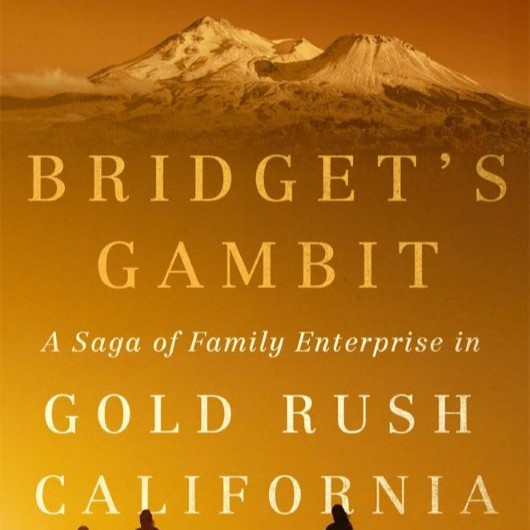
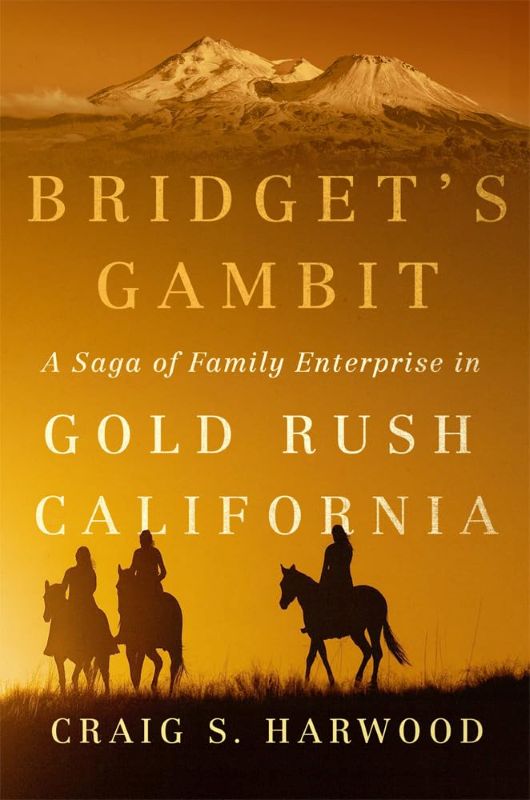
That conviction led to Bridget’s Gambit, published by the University of Oklahoma Press, a biography of an Irish immigrant widow who survived famine, crossed a continent, and built a small empire in Gold Rush California, doing business in a world that assumed women couldn’t.
Harwood, a geologist and Ben Lomond resident, spent years tracking down court records, land deeds, and newspaper archives to piece it together.
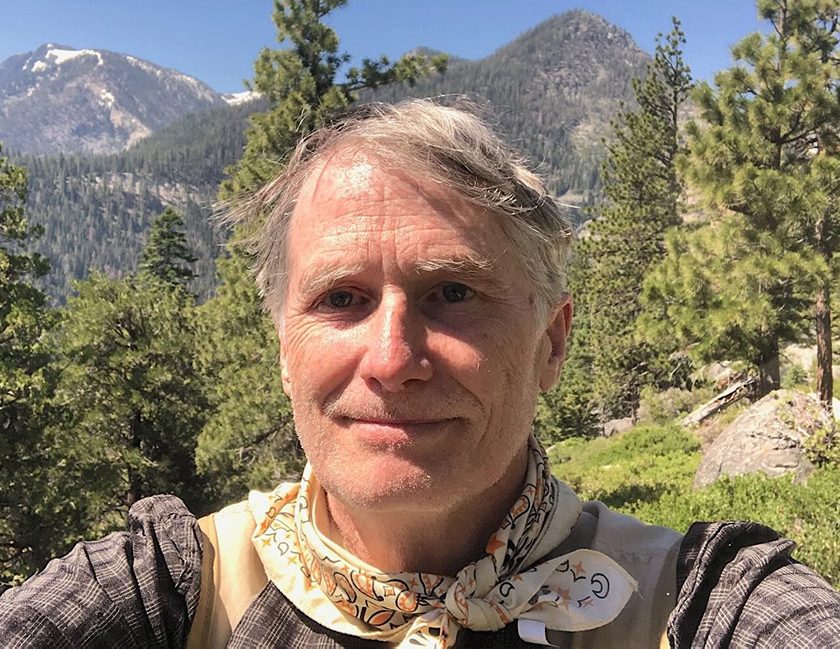
Ben Lomond author Craig Harwood
The story begins in County Wexford in the 1790s, where Bridget’s family were tenant farmers — poor, largely dependent on potato crops, and vulnerable to the recurring famines that devastated Ireland well before the famous Great Hunger of the 1840s. “There were earlier phases,” Harwood noted. “Famines in 1817 and 1822. Each time, immigration surged.” Bridget married James Evoy around 1820, and by 1828, with four children and a fifth on the way, they made the decision to leave. James went ahead to Missouri to secure land. Bridget followed alone and pregnant on a packet ship across the Atlantic, then by wagon to the Missouri frontier.
Within two years of arriving, James succumbed to pneumonia. Bridget was in her early 40s, in St. Louis with five children, no husband, and a frontier at her doorstep. Most women in her position, Harwood observed, would have sought to remarry for financial security. Bridget apparently never considered it. For the next two decades she farmed, raised her children, and quietly began doing real estate deals with some of St. Louis’s most influential men.
When gold fever swept the country in 1849, Bridget, then 59 years old, loaded up wagons and headed west with her family. The overland journey took six months and came close to catastrophe multiple times.
In the Nevada desert, the family got lost in a box canyon and had to backtrack miles they could barely afford. Their oxen failed. Entering the Sierra Nevada in mid-October — dangerously late, with the Donner Party disaster only two years in the past — they abandoned the wagons entirely and packed everything on their backs.
They made it through.
Arriving near what would become Marysville and Yuba City in California in early 1850, the Evoy women didn’t rush to the gold fields. Instead, they set up a trading post at the river landing where miners arrived by boat — a classic pinch point. They ran a boarding house in the back. They immediately began buying land, offering mortgages, and collecting interest. Bridget’s daughter Ellen, at 21, was among the first women in California to purchase property independently. Margaret, the other daughter, built a toll bridge across the Bear River and added a blacksmith shop, a farm, and a trading post on the other side.
Eventually Bridget settled in what is now the Temescal District of North Oakland, purchasing over 100 acres and positioning herself, with characteristic foresight, along what would become Telegraph Avenue. She encouraged the city’s nascent trolley system to run along her property line, creating frontage value for the next generation.
As the family’s wealth grew, so did their civic presence. Bridget’s daughters Ellen and Margaret helped establish Sacred Heart Parish in North Oakland, contributing funds and hosting early services in their own home before the church was built. Margaret later donated her home to the local Catholic parish to be used as an institution for people with disabilities. “She never lost touch with where she came from,” Harwood said near the end of his talk. “Even after everything she built, she never forgot the downtrodden. The family tried to do what they could with some of that wealth that they had.”
She died in 1867 and is buried in the Oakland Hills, her plot among the first in the cemetery. From that hilltop, her grave overlooks the land she farmed, and, in the distance, the Golden Gate.
Bridget’s Gambit is available through the University of Oklahoma Press and online booksellers.

The San Lorenzo Valley Post is your essential guide to life in the Santa Cruz Mountains. We're dedicated to delivering the latest news, events, and stories that matter to our community. From local government to schools, from environmental issues to the arts, we're committed to providing comprehensive and unbiased coverage. We believe in the power of community journalism and strive to be a platform for diverse voices.