The Shrub That Starts the Season: Pink Flowering Currant
By Linda Skeff
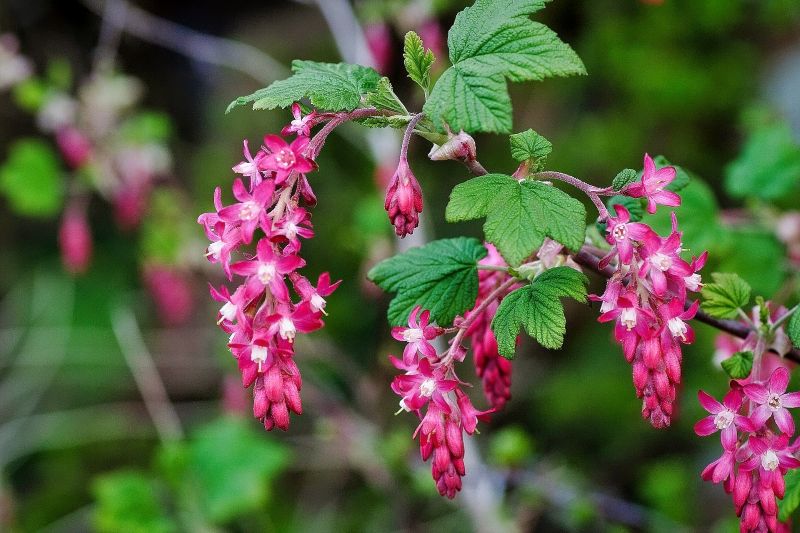
In February, while much of the San Lorenzo Valley still feels suspended between winter storms, Pink flowering currant is already in bloom. Long before most native shrubs have opened a bud, its cascading pink flower clusters hang along woodland edges and creek corridors, signaling the beginning of another growing season in the Santa Cruz Mountains.
That early timing is no accident — it is an ecological strategy. This shrub pushes out its clusters precisely when the Valley’s wildlife is hungriest, kick-starting a food web that will build on itself all season long.
Pink flowering currant (Ribes sanguineum var. glutinosum) flowers precisely when many of the Valley’s earliest pollinators are emerging from winter with few reliable food sources available. Bumblebee queens, newly awake from overwintering beneath soil and leaf litter, depend on early nectar to begin founding colonies. Native mason bees arrive at the flowers alongside syrphid flies and predatory wasps, all feeding during one of the leanest periods of the ecological calendar.
Timed for Hunger
And where insects gather, the food web follows.
Wrens, chickadees, and towhees move through the shrub’s interior branches, feeding on the insects drawn to the bloom. Anna’s Hummingbird visits the flowers as well, feeding during the critical late-winter nesting season when reliable nectar can still be scarce in the San Lorenzo Valley.
A Second Season Begins
By spring, the shrub leafs out fully and enters a second ecological phase. Insects move onto the fresh foliage and stems, and the dense branching structure becomes shelter, nesting cover, and foraging habitat for small birds moving through the understory.
Fruit, Birds, and Moving Seeds
Then, just as the valley transitions toward its long dry summer season, the berries ripen.
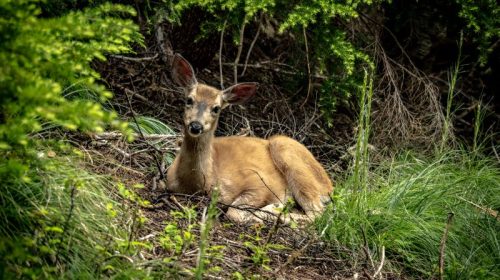
By June and July, Pink flowering currant produces clusters of blue-black fruit quickly taken by American Robin, Cedar Waxwing, Hermit Thrush, Black-headed Grosbeak, and Steller’s Jay. Deer, raccoons, and gray fox may forage the berries as well, pulling the shrub into the broader food web extending through the forest edge and creek corridors.
The birds that feed on the fruit do more than consume it. They carry the seeds beyond the garden boundary, depositing them along fence lines, woodland margins, and creek corridors — often packaged with a small amount of natural fertilizer. This is one way native shrubs slowly re-establish themselves across the landscape, extending habitat outward over time.
What Pink flowering currant demonstrates so beautifully is that habitat gardening is not static. A functioning garden moves. Seeds travel. Birds carry nutrients and energy through the system. Insects emerge, feed, reproduce, and become food themselves. The garden becomes part of the larger ecology surrounding it.
In SLV, where many properties border forest and riparian habitats, shrubs like Pink flowering currant help create the middle layer of habitat often missing from residential landscapes. Between groundcovers and tall canopy trees, this shrub layer provides nesting structure, shelter, movement corridors, flowers, fruit, and protection at heights that wildlife actively uses.
That middle layer matters more than many people realize.
Built for the California Dry Season
Pink flowering currant is also remarkably well adapted to the rhythms of the Santa Cruz Mountains. Once established, it requires no summer irrigation and thrives in the dry-season pattern that defines much of California’s native ecology. Summer watering can actually shorten its lifespan.
Along woodland edges and creek corridors, its roots help stabilize soil while fallen leaves and pruned material build organic matter that supports fungi, insects, and the decomposer communities beneath the shrub. What appears to be simple leaf litter is actually part of the living system that sustains the forest floor.
This is why habitat gardening works best when we disturb less.
Leave the leaves. Allow shrubs room to develop their natural form. Return cuttings to the soil through chop-and-drop rather than hauling them away. These small decisions help rebuild the layered ecological relationships that native plants evolved within over thousands of years.
Pink-flowering Currant is not simply an early-blooming shrub. It is one of the first plants each year to restart the food web.
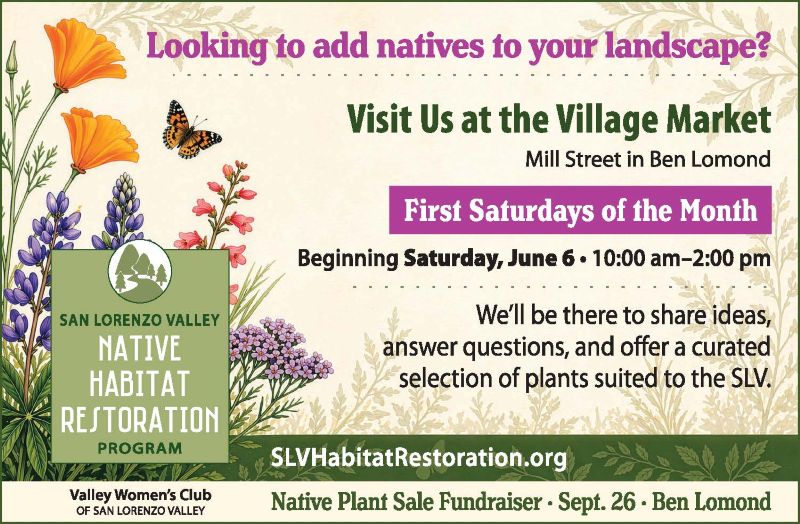
This plant can be purchased at the Native Plant Sale at Highlands Park on September 26. For native plant resources, habitat gardening information, and upcoming events, visit the SLV Native Habitat Restoration Program at slvhabitatrestoration.org.
Linda Skeff is chair of the SLV Native Habitat Restoration Program of the Valley Women’s Club of SLV. She was the 2019 San Lorenzo Valley Chamber of Commerce Woman of the Year. Linda’s column appears in the monthly Native Habitat Restoration Program newsletter.
Featured photo: Pink Flowering Currant (Ribes sanguineum) by Mark Robinson

The San Lorenzo Valley Post is your essential guide to life in the Santa Cruz Mountains. We're dedicated to delivering the latest news, events, and stories that matter to our community. From local government to schools, from environmental issues to the arts, we're committed to providing comprehensive and unbiased coverage. We believe in the power of community journalism and strive to be a platform for diverse voices.