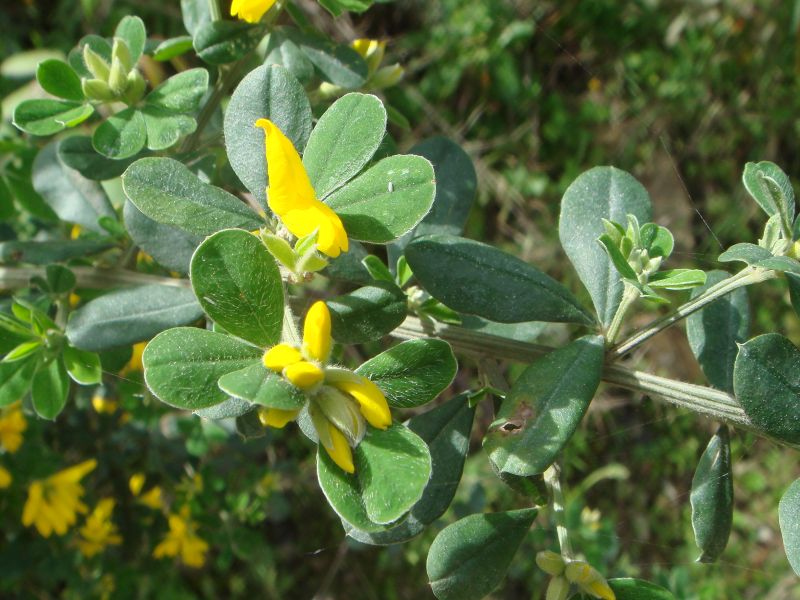
French Broom: The Plant That Fire Loves
From the Ground Up: Invasive of the Month: French Broom
By Linda Skeff
By now, French Broom (Genista monspessulana) is everywhere — blanketing hillsides, lining neighborhood roadsides, spreading in dense walls along Route 236 and Mount Hermon Road. It has been here so long that many of us barely notice it anymore.
That familiarity is part of the problem.
Introduced to California in the mid-1800s as a garden ornamental, French Broom now occupies more than 100,000 acres statewide and carries one of Cal-IPC’s highest invasive plant ratings.
The Seed Is the Story
One French Broom plant produces more than 8,000 seeds a year. When the pods ripen, they burst open explosively, much the way California poppy pods do, scattering seeds in every direction.
The most fascinating dispersal pathway is by ants. Attracted to a fatty coating on the seed, they carry it back to the nest, eat the coating, and discard the seed in the loosened soil around the nest entrance, where conditions are ideal for germination.
Winter rains wash seeds from roadside embankments and hillsides down into culverts. And from there into our creeks, where they may eventually enter the San Lorenzo River, carrying them far beyond where they started.
Fire Makes It Worse
French Broom is a ladder fuel. Its woody stems and dense evergreen growth create a continuous path that carries fire from the ground into the tree canopy.
Many people assumed the Broom that burned during the CZU Fire was gone. It wasn’t.
Fire cracks open the hard seed coat and triggers mass germination. On part of a canyon wall on my property that burned during CZU, Broom began emerging where it had never been before.
Because French Broom does not bloom until it reaches about 16 inches, we were unaware of it until the bloom appeared. The three abutting properties hired a local crew to access the canyon wall and remove it before it set seed. Two years later, there has been no new bloom and Ceanothus, a native shrub that had never grown there before, has established itself in the same place.
A Seed Bank That Lasts Decades
What makes Broom so persistent is the seed bank. Seeds can remain viable in the soil for 40 years or more, longer than many of us have lived in the valley, with every mature plant adding thousands more.
Every plant that has ever set seed has been adding to that bank. But the bank is depletable with consistent attention, ongoing monitoring, and removal. Timing determines the removal method.
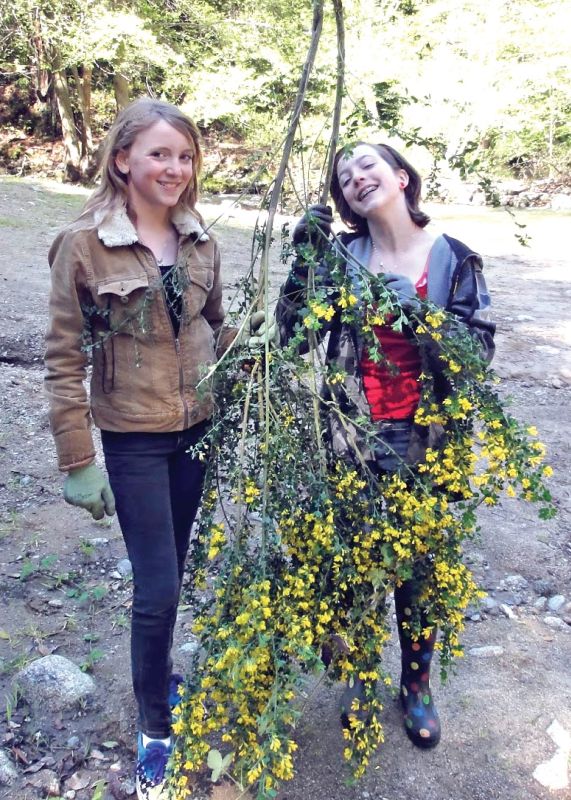
Kassidy Gambelin and Jordan Beiden-Charles remove invasive French Broom at Junction Park in Boulder Creek in a throwback photo. (Linda Skeff)
Timing Matters
The best window is before bloom — after winter rains have softened the soil, when plants are smaller, and no seed has formed. Pull the entire plant, root crown and all, and leave it on the ground. Once blooming has begun but before pods form, pull up whole plants and pile them away from desirable plants, covering them with a tarp if possible.
Once pods are forming, the strategy changes entirely. Cut only the seed-bearing branches and bag them immediately. Partially developed pods continue to ripen after cutting. That bag goes in the garbage, not the green waste bin. Santa Cruz County green waste is composted, and French Broom seed survives composting.
Restoring Together
French Broom has been advancing through the San Lorenzo Valley for generations, but so has the effort to stop it.
Talk with your neighbors. Coordinate removal before plants set seed. The energy is always higher when people work together. When neighborhoods work together, they can interrupt the corridors that allow Broom to spread across the valley.
Every plant pulled before it sets seed is ground held for the natives waiting beneath the surface.
To help restore your own landscape, visit the SLV Native Habitat Restoration Program’s Native Plant Sale on Saturday, September 26, at Highlands Park. Learn more about habitat gardening and upcoming events at slvhabitatrestoration.org.
Linda Skeff is Program Director of the SLV Native Habitat Restoration Project, a project of the Valley Women’s Club, and Chair of the Native Habitat Committee. She was the 2019 San Lorenzo Valley Chamber of Commerce Woman of the Year. For habitat gardening resources, upcoming events, and to sign up for the monthly newsletter From the Ground Up, visit slvhabitatrestoration.org.

The San Lorenzo Valley Post is your essential guide to life in the Santa Cruz Mountains. We're dedicated to delivering the latest news, events, and stories that matter to our community. From local government to schools, from environmental issues to the arts, we're committed to providing comprehensive and unbiased coverage. We believe in the power of community journalism and strive to be a platform for diverse voices.