How to Make Lacto-Fermented Pumpkin Pickles
By Thomas Andersen
The end of November seems to mark the end of pumpkin season. While those jack-o’-lanterns have already melt into mush in the yard (or on the porch) and the highly coveted seeds from those giant pumpkins are locked away in the safe, the rest of the crop might just be in the clearance bin, and this includes sugar pumpkins.
Sugar, or baking, pumpkins and carving pumpkins are completely different. Sugar pumpkins are pretty small and have thick walls and tough skins. Their meat is smooth, not stringy. Try carving these into jack-o’-lanterns and you may end up using a box of Band-Aids. Instead, use a sharp knife to cut off the top and bottom. Split them in half and remove the seeds and stringy stuff. Season and roast the seeds; they’re good for you.
If you somehow get a plethora of sugar pumpkins, a few typical ways to preserve them are:
- Baking the halves and pureeing them. Two cups make a pie, so freeze a few bags for the future.
- Cutting some into one-inch chunks (without the peels) and pressure canning them.
- Dehydrating thin slices and using them sliced, rehydrated, or made into pumpkin dust.
That’s the usual preservation stuff, but you’ve got to try something else: lacto-ferment them.
Like most fermented pickles, it’s a pretty easy process, and your choices of additional flavorings are practically limitless, but think ahead. Eating pickled pumpkins out of the jar is one option, but there are many more. Put small chunks on your fancy appetizer plate with little colored toothpicks, slice them up and add them to your salads, or puree them and add them to your silky-smooth soup. Bake them till they are soft and smash them on toast, or put them on the BBQ for a while.
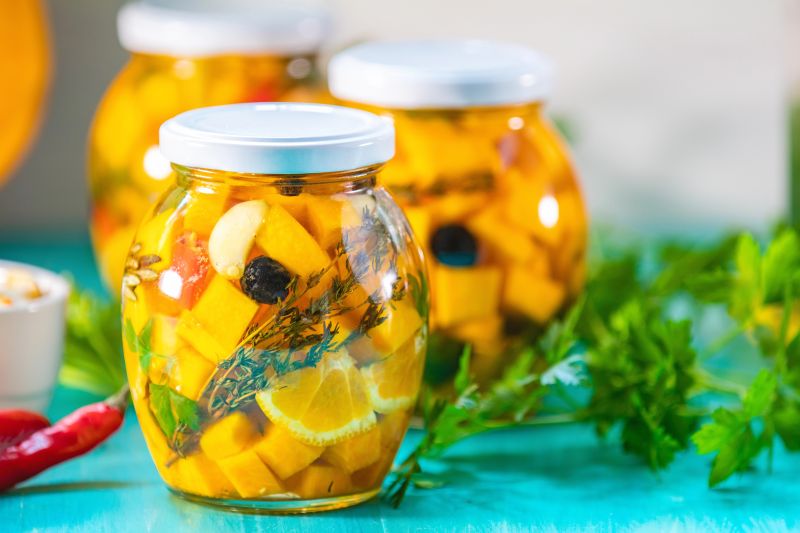
To make about four quarts, you’ll need a pumpkin that weighs about four pounds, about the size of a kid’s head. You’ll need four quart jars that are clean and sanitized. Use a commercial sanitizer like iodophor or Star San. Sanitize the jars and lids. It’s cheap insurance. Lactobacillus bacteria live on everything going into the jar, but who knows what else is on the jar itself?
Use a SHARP knife to cut off the top and bottom, then cut it in half. Slice the halves into half-inch wedges and remove the outer peel. Cut them to fit into the jars with an inch of space on top. Pack them in pretty tight so they don’t float.
Add some herbs or seasoning if you’d like. A common mix is one stick of cinnamon or ½ tsp of ground cinnamon, ¼ tsp ground nutmeg, ¼ tsp ground ginger, and ⅛ tsp ground cloves, or just one big tablespoon of pumpkin pie spice mix for every quart. Peppercorns and sprigs of thyme work well too.
Make a 2%–2.5% salt brine by mixing one heaping teaspoon of pickling or sea salt into one cup of non-chlorinated water. Fill each jar to within one inch of the top.
In every jar I put one little pinch of black tea. It helps keep them crispy. You can use a little piece of oak leaf too, but I don’t have an oak tree. Stir out the bubbles and loosely attach the lids. Make sure the pumpkin pieces are completely submerged and stay that way. Use a weight of some sort if you can. Place the jars on a tray to catch any spillover. Into a 70- to 75-degree spot for a week or more they go. They are pretty hard, so it can take a while. Check them every day for a week. Tighten the lids and turn the jars over a few times to mix them up. Loosen the lids and make sure everything is under the brine.
Taste them after a week. If they are done, use them or put them in the fridge or another cool spot to slow down the fermentation until you need them. I made one jar with some pickled habanero peppers and WOW! Scorchingly wonderful.
Try this with the pumpkin pie–flavored pickles. Bake enough to end up with half a cup of mash. It should take about half an hour at 350 degrees. Use oiled parchment paper. Mash them up with a small beaten egg. Add ¼ cup of flour and ¼ cup of grated Parmesan. Add ½ tsp baking powder and ½ tsp salt. Make little balls and deep-fry them at 375. Call them fritters if you want.

The San Lorenzo Valley Post is your essential guide to life in the Santa Cruz Mountains. We're dedicated to delivering the latest news, events, and stories that matter to our community. From local government to schools, from environmental issues to the arts, we're committed to providing comprehensive and unbiased coverage. We believe in the power of community journalism and strive to be a platform for diverse voices.