Sourdough Soft Pretzels with Super Soda
By Tom Andersen
Did you ever wonder how the soft pretzel made its way into the sports arena — baseball parks in particular? Consider this: Baseball, hot dogs, apple pie, soft pretzels, and Lent. What? Turns out there may indeed be a connection — work with me.
The soft pretzel was invented by a monk in some obscure European monastery to reward his pupils for paying attention (whatever it takes). For the believers, the twisty shape represents folded arms, and the three holes represent the Holy Trinity. Lent is the season before Easter, and strict observers fast during that time. The original pretzels were unleavened — or maybe naturally leavened — and therefore okay to eat during the fast.
The pretzel eventually made its way to Pennsylvania, then New York, and okay, Boston too (I’m guessing). Plenty of both orthodoxy and baseball fans there. Lent ends just before Easter, but baseball season starts a bit before that. Orthodox baseball fans of old could have neither hot dogs nor apple pie until they got the green light — but thumbs up to the pretzel. Maybe a big stretch, but it’s all I have.
The big debate over the soft pretzel is bakers lye: yes or no? Lye makes for a nice brown, tangy crust and a soft middle, but it can be dangerous. Boiling pretzels in plain water makes pretzel-shaped bagels. Most people use baking soda in boiling water, which is definitely better than nothing. But there’s another way. A quick consultation with my science advisor confirms that cooking baking soda at about 400 degrees for an hour makes it much more alkaline — not as potent as lye, but close enough to do the job. This is my preferred option.
For those without a personal science advisor: baking soda is sodium bicarbonate with a pH of about 8. After baking it for a while, it becomes sodium carbonate with a pH of 11 to 12. Lye runs 13 to 14, but those few points make a huge difference. I make half a cup of the super soda at a time and keep it in a well-labeled glass jar — lest I accidentally put it in my waffle batter and create a monster. Dump half a cup of baking soda into an oven-safe pan (NOT ALUMINUM), bake at 400 degrees for at least an hour, let it cool, and store it in your jar. Be careful with it — it can burn you.
Now, let’s make some dough. I use a little store-bought yeast and the pour-off from maintaining my sourdough starter. Purists — do your thing; they’ll be outstanding. Here’s my recipe:
- 3 cups flour (1½ cups whole wheat, 1½ cups bread flour)
- ½ cup pour-off starter
- 1 tsp sugar
- 1 tsp packaged yeast
- 2 tablespoons oil
- 2 tsp salt
- 1 cup warm (110°F) water
Put the sugar and yeast in a big bowl, add the water, and let the yeast bloom. Add the starter and oil and stir it up. Add half the flour and mix it with the handle of a big wooden spoon — I don’t know, it’s how my mom and grandma did it. Add the other half and finish with your hands. Cover and let it rest for fifteen or twenty minutes, then add the salt. Don’t forget it! Knead on a well-floured board for six or seven minutes. Ball it up and let it rise until doubled, about an hour. Purists, stick it in the fridge and see it tomorrow.
Once doubled, cut the dough into eight to ten equal pieces. Roll each into a rope two feet long, shape into a circle, cross the legs, twist once, and fold them back up onto the circle.
Safety note: Have vinegar nearby to neutralize spills only — not on skin. Follow proper first aid procedures and look them up before you start.
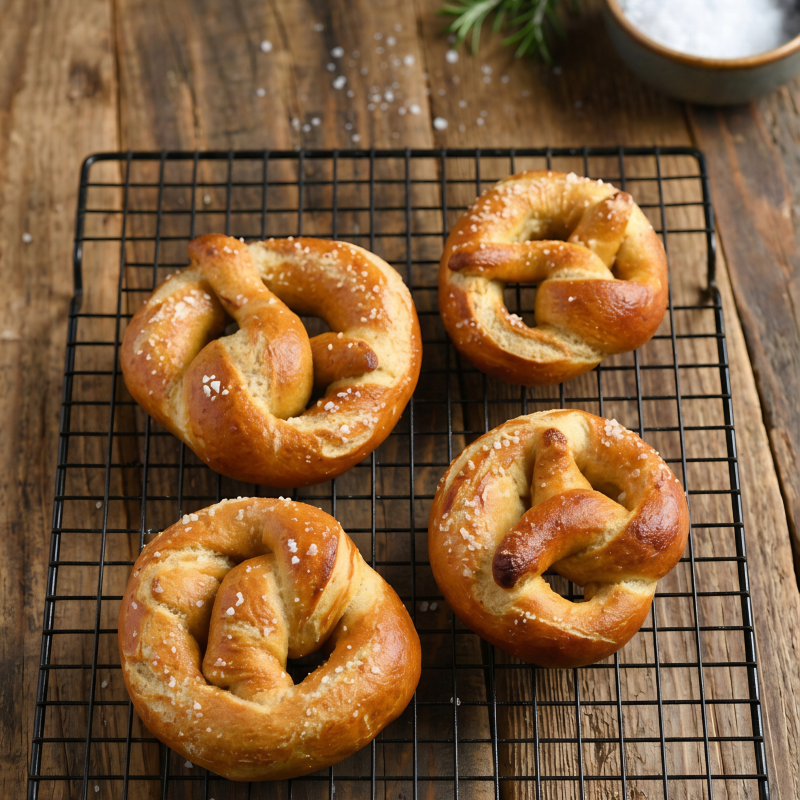
Add three tablespoons of super soda carefully to a quart of cold water in a stainless pot, stirring constantly. Wear gloves. Heat until it gently simmers. Meanwhile, preheat the oven to 450 degrees. Dip each pretzel in the simmering water for about thirty seconds, remove, and sprinkle with pretzel or coarse salt while wet. Bake on a parchment-lined sheet for twelve to fifteen minutes. These last a few days in the bread box — if you can keep people away from them long enough. If you go the full sourdough route like some of our friends will, lock the doors until you get yours. Otherwise, you may have to wrestle for one.

Thomas Andersen
Tom Andersen is a writer, cook, martial arts instructor and lifelong Felton resident. He explores the world of fermented food and drinks in print and online. Tom lives in Felton with his family and many pets. He is currently working on a cookbook about fermentation.