What Makes a Mountain Property Truly Valuable?
From Logging Flumes to Creekfront Retreats
By MaryBeth McLaughlin
Long before the Santa Cruz Mountains became home to commuters, artists, retirees, and weekend dreamers, the creeks determined where people settled. Water meant survival. It powered lumber mills, supplied homes, and carved the canyon routes that would later become many of our mountain roads. In the logging era, wooden flumes carried water and lumber for miles through the redwoods, connecting remote camps to the growing towns below.
More than a century later, those same natural features still quietly shape property values throughout the San Lorenzo Valley.
After two decades of selling mountain homes and land, I’ve learned that value here has never been as simple as price per square foot. Buyers may begin their search online comparing bedroom counts and acreage, but once they start walking properties in the mountains, something else happens. They begin responding to sunlight. To usable land. To water. To privacy. To the feeling of a place.
And perhaps nowhere is that emotional pull stronger than near a creek.
Creekside Properties
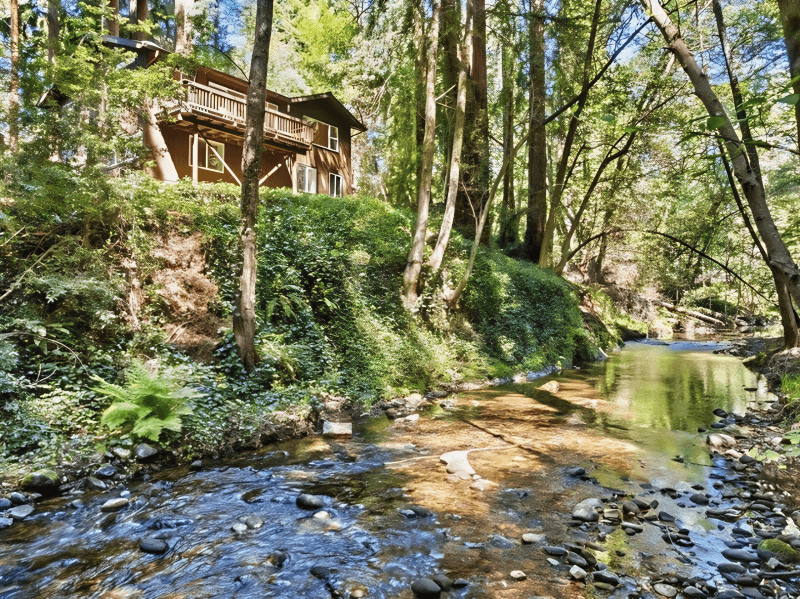
There is something almost universal about the sound of moving water beneath redwoods. Buyers linger longer beside creeks. Conversations slow down. People begin imagining morning coffee on the deck, summer afternoons by the water, children exploring, dogs splashing, gardens thriving. In many cases, a creek becomes the emotional centerpiece of a property.
Of course, mountain living is never quite that simple. Creeks can also bring flood concerns, erosion considerations, and insurance questions. Yet even with those realities, creekside properties continue to command attention because they offer something increasingly rare: a connection to nature that feels immediate and alive.
Water has always mattered here. But water is only one part of the equation.
Usable land may be one of the most underestimated forms of value in the mountains. A property may technically span several acres, but if most of it is steep hillside, the experience of living there can feel very different than a smaller parcel with sunny flat areas, easy parking, room for gardening, outdoor entertaining, or future improvements. In the mountains, an extra quarter-acre of usable land can sometimes matter more than several wooded acres climbing a canyon wall.
Sunlight matters too — perhaps more than newcomers initially realize. Redwoods are magnificent, but dense shade can also mean dampness, moss, limited gardening potential, and colder winter living conditions. Buyers consistently gravitate toward properties with a balance of majestic trees and natural light. A sunny bench above the fog line with southern exposure can completely transform how a property feels year-round.
Access has also become increasingly important. Many of our mountain roads originally followed creek canyons, old ranch routes, and logging paths established generations ago. Today, road conditions, driveway usability, turnaround space, and fire access requirements all influence value in ways buyers may not initially anticipate. A beautiful home at the end of a narrow, difficult road may struggle compared to a similar property with easier year-round access and a more manageable commute.
Then there is the balance between privacy and isolation — a uniquely mountain equation. Buyers often arrive seeking peace, quiet, and separation from the density of town. But they also want reliable internet, reasonable drive times, and enough accessibility to comfortably support daily life. In recent years, remote work has only amplified the importance of connectivity and infrastructure throughout the Valley.
And yet, despite all the practical considerations — insurance maps, septic systems, defensible space, well production, and internet speeds — mountain buyers still tend to fall in love the same way people did generations ago.
Usually, it starts beside the water.
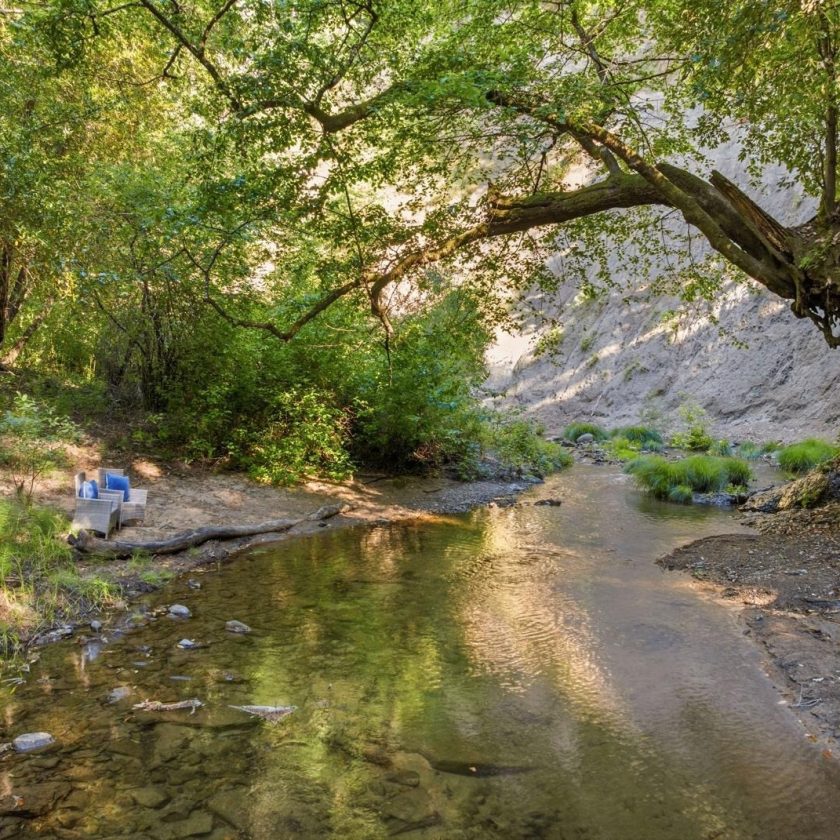
Perhaps that connection explains why so many of the historic communities throughout the San Lorenzo Valley first emerged where they did: beside creeks, near springs, along rivers, and beneath towering redwoods. Long after the logging flumes disappeared into history, the creeks continue shaping how people experience these mountains — and what they value most within them.
Because here in the Santa Cruz Mountains, value has always been about more than the house itself. It’s about the land. The light. The water. The feeling.
And sometimes, simply the sound of a creek moving quietly through the trees.
Featured photo: 250 Keller Drive, Boulder Creek, offered at $775,000 (Jordan T. Smith, ISO Imaging)

MaryBeth McLaughlin
MaryBeth McLaughlinis a local Realtor specializing in mountain and rural properties throughout the Santa Cruz Mountains. She brings humor, heart,and hard data to every transaction — and now to her new monthly column.