The Hidden Journey of a Wild Ginger Seed
By Linda Skeff
Right now, along the shaded creek banks and in the redwoods of the San Lorenzo Valley, a small transaction is taking place — one most people walk past without noticing. Ants are moving seeds.
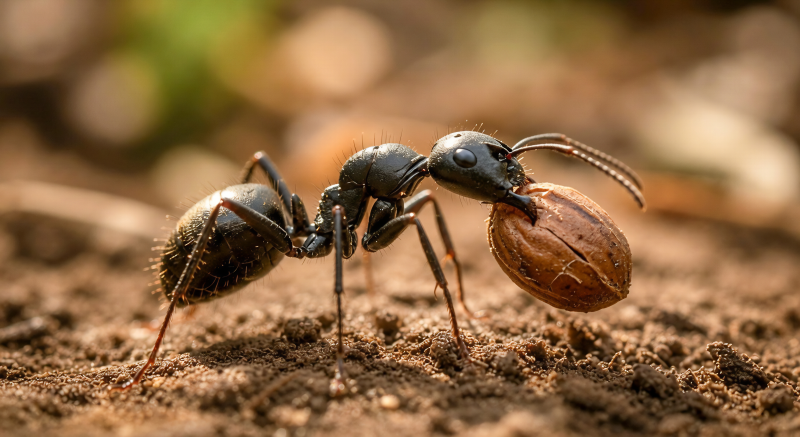
It may look like nothing more than an ant carrying something slightly too large for its body. But when that ant is carrying a Wild Ginger seed, it may also be changing where that seed’s story continues.
This remarkable relationship has a name: myrmecochory (mur-mi-KO-kuh-ree), or ant-mediated seed dispersal. For certain native plants, including Wild Ginger, it isn’t simply an interesting ecological detail — it may be the primary way their seeds travel beyond the parent plant.
The arrangement works through a kind of built-in bargain. Wild Ginger seeds carry a small, fat- and nutrient-rich appendage called an elaiosome. Ants collect the seed for this food source, carry it back to the nest, remove the elaiosome to eat, and leave the seed itself in nearby loosened soil. The ant gets a meal. The plant gets transportation and a freshly prepared place to grow.
Wild Ginger begins dropping its seeds in early summer. As ants carry some seeds away from the parent plant, they may help establish new patches elsewhere in the forest.
If you’re walking shaded creek corridors or moist woodland trails this month, look for Wild Ginger’s low, heart-shaped leaves. The partnership unfolding beneath them is easy to miss. But, this is the season when it is quietly shaping the next generation of plants.
Earlier in the year, ants performed the same service for another familiar Valley wildflower, Western Trillium. Both species rely on this quiet partnership.
Nature’s Restoration Crew
Some plants scatter seeds on the wind. Others depend on birds or mammals. Wild Ginger and Western Trillium gradually expand through underground rhizomes. When ants carry the seeds, they may help those plants start new patches beyond where they already grow.
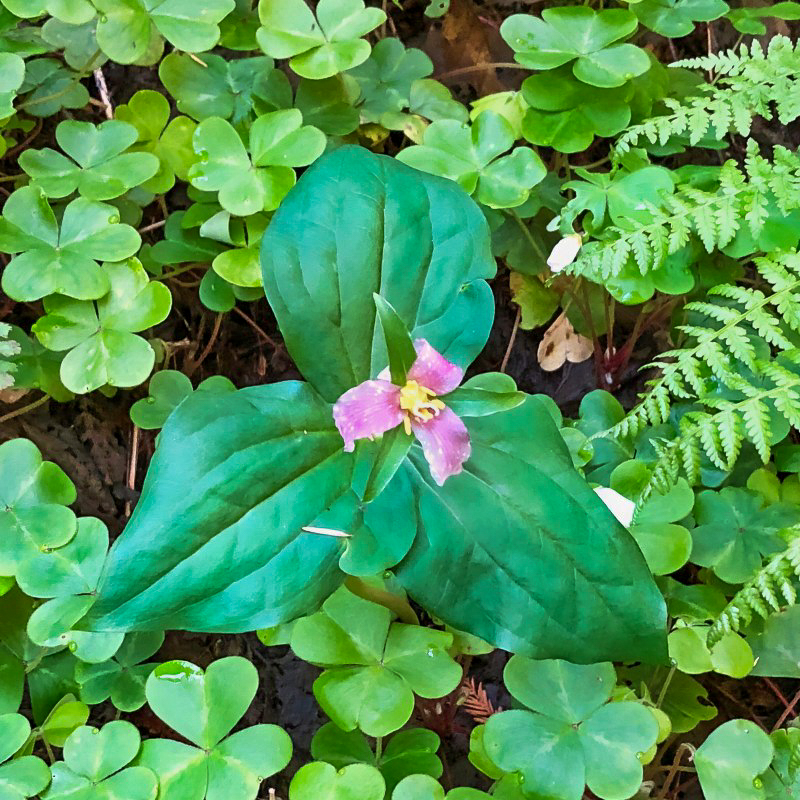
Western Trillium (Photo: Linda Skeff)
It’s a reminder that restoration isn’t only something people do. Long before restoration became a community effort, the San Lorenzo Valley already had its own workforce quietly distributing native plants, one ant colony at a time.
Understanding these relationships also changes how we care for the land. Leaving leaf litter in place, avoiding unnecessary tilling, and protecting undisturbed soil around ant colonies helps support a natural dispersal system that has been working for thousands of years.
Want to dig deeper? You’ll find more about Wild Ginger and other San Lorenzo Valley native plants at slvhabitatrestoration.org.
Featured photo at top of page: A worker ant can often be spotted carrying seeds back to their nest (Contributed by Linda Skeff)
Linda Skeff
Linda Skeff is Program Director of the SLV Native Habitat Restoration Program, a program of the Valley Women’s Club, and Chair of the Native Habitat Committee. She was the 2019 San Lorenzo Valley Chamber of Commerce Woman of the Year. For habitat gardening resources, upcoming events, and to sign up for the monthly newsletter From the Ground Up, visit slvhabitatrestoration.org.