Why the Offshore Drilling Debate Matters in the Santa Cruz Mountains
An Environmental and Economic Case for Inland Engagement
By Mary Andersen
At first glance, offshore oil drilling may seem like a coastal issue, distant from the redwood forests and mountain towns of the San Lorenzo Valley. But the federal government’s proposal to open new oil and gas leases off California’s coast has prompted an unexpected coalition of opponents.
The Santa Cruz County Board of Supervisors, coastal advocates, inland communities, Republican and Democratic lawmakers, fishing interests, tourism operators, and environmental groups are all pushing back against the same plan. That kind of broad opposition suggests something bigger than typical environmental politics.
What’s actually at stake for communities in the Santa Cruz Mountains? And why should people who live nowhere near the ocean care about drilling rigs they can’t see? The answer lies in shared regional systems including climate, economy, and long-term environmental resilience.
The County Takes a Stand
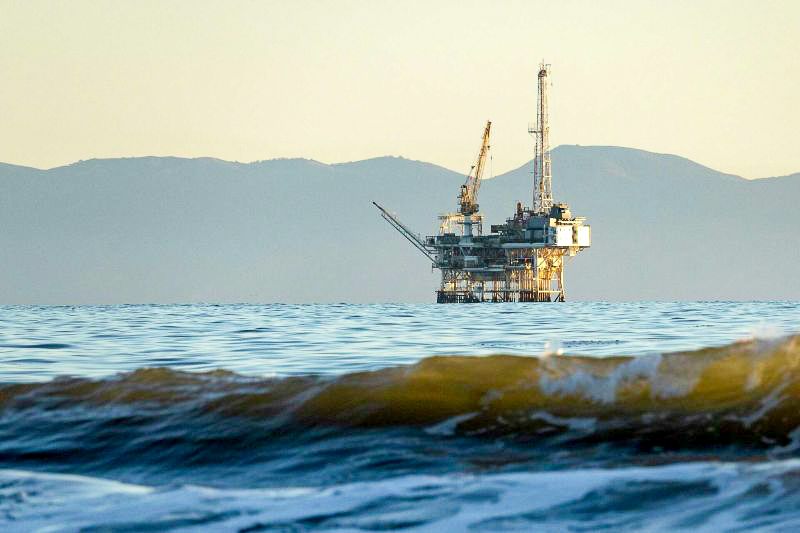
In January, the Santa Cruz County Board of Supervisors formally objected to the U.S. Department of the Interior’s proposed 11th National Outer Continental Shelf Oil and Gas Leasing Program. The plan would permit up to 34 offshore lease sales across 1.27 billion acres of federal waters, including lease sales off central coast California.
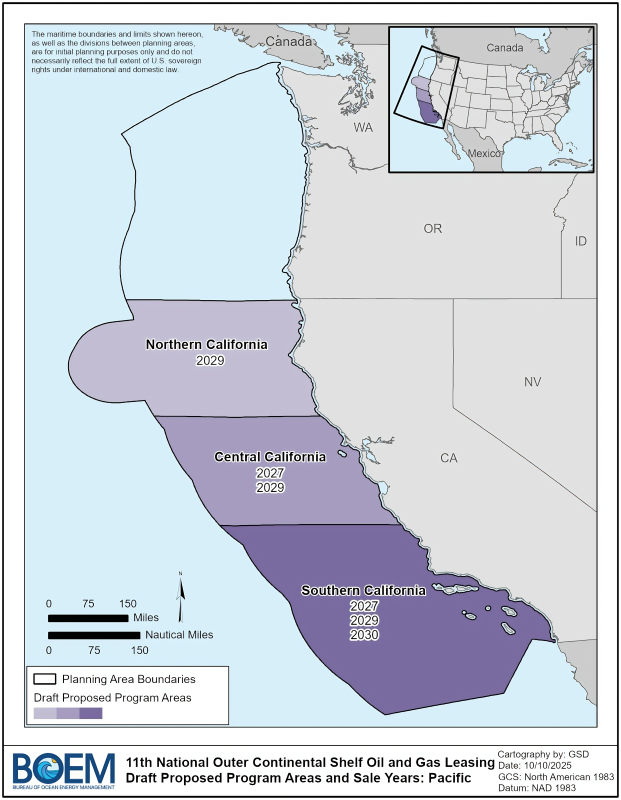
These would be the first new offshore leases in California waters since the Reagan administration.
The County’s letter urged federal officials to exclude California entirely and extend the public comment period. The rationale covered risks to coastal economies, marine ecosystems, commercial fisheries, and potential conflicts with National Marine Sanctuaries like Monterey Bay. There was also pointed criticism about insufficient public input – the plan affecting more than a billion acres of ocean is moving forward without a programmatic environmental impact statement.
“Santa Cruz County’s coast is fundamental to our economy, our environment, and our quality of life,” Supervisor Justin Cummings said. “Opening the door to new offshore drilling places our fisheries, tourism industry, and coastal communities at unnecessary risk. We are calling on the Department of the Interior to listen directly to coastal communities before advancing a plan that could have irreversible consequences.”
Fair enough for coastal Santa Cruz. But what about our mountain towns farther inland?
Climate and Fire Risk
The most direct ecological link between offshore drilling and mountain communities is climate.
Coastal waters also regulate regional weather. Fog formation, temperature moderation, the marine layer that sustains redwood forests – these depend on stable ocean-atmosphere interactions. Offshore drilling wouldn’t directly disrupt fog patterns, but the cumulative climate impact of continued fossil fuel development absolutely does affect these systems over time.
For mountain residents still recovering from the CZU Lightning Complex fires, the stakes are measurable. Fire recovery depends on stable weather patterns, adequate moisture, and predictable storm cycles – all increasingly disrupted in recent times.
Watershed Health
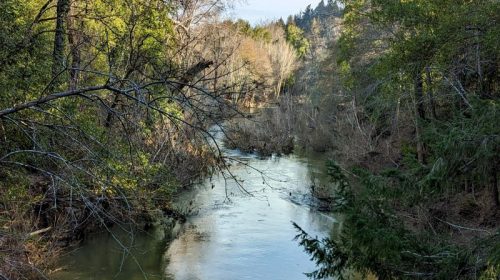
The San Lorenzo River and its tributaries drain into Monterey Bay. This creates an ecological connection between mountains and coast.
Healthy estuaries do matter for watershed function. They process sediment, support biodiversity, and maintain water quality in the coastal zone. When these systems get degraded by oil spills, chronic pollution, habitat loss, regional ecosystem resilience takes a hit.
However, the primary threats to mountain water quality come from sources much closer to home: post-fire erosion, aging infrastructure, and stormwater runoff. Industrial activity can cause sediment to back up in mountain creeks or make roads wash out more easily. Those problems are driven by local conditions.
What offshore drilling does represent is an additional stressor on an interconnected regional system already under pressure from climate change, development, and past environmental damage.
Tourism: The Economic Connection
The clearest and most immediate link between offshore drilling and mountain communities is economic.
Tourism drives the San Lorenzo Valley economy. People come for redwood parks, scenic drives, wineries, live music, art galleries, and the small-town main street vibe of Felton, Ben Lomond, and Boulder Creek. They dine in local restaurants, shop at independent stores, and stay in local hotels and vacation rentals. All of this sustains a network of businesses that depend on steady visitation. The entire economic ecosystem depends on visitors showing up consistently.
This tourism economy is inseparable from the coast. Monterey Bay and Santa Cruz beaches serve as regional gateways. Visitors routinely combine beach days with mountain excursions; the appeal lies in the combination. A degraded or industrialized coastline – whether from oil spills, visible drilling infrastructure, or diminished marine wildlife – weakens the entire regional brand.
Trip cancellations ripple. Fewer customers for mountain businesses. Lower occupancy for vacation rentals. Reduced transient occupancy tax that funds county services, road maintenance, wildfire prevention, and emergency response. The economic engine that keeps small mountain towns afloat depends on the coast staying appealing.
According to Visit California, coastal tourism generates billions in economic activity across the Central Coast region, supporting jobs and tax bases from Santa Cruz to San Luis Obispo counties. Offshore drilling introduces risk to these economies at a scale that would impact communities far from any drilling rig.
The Monterey Bay National Marine Sanctuary is both an environmental asset and an economic engine. Whale watching, kayaking, diving, research institutions, educational tourism, and commercial fisheries all depend on the sanctuary’s ecological health.
Offshore drilling conflicts directly with sanctuary protections. Seismic testing, vessel traffic, industrial infrastructure, all disrupt marine life, degrade habitat, increase spill risk in protected waters. Marine ecosystems can take decades to recover from that kind of damage, if they recover at all.
Inland communities benefit from sanctuary-driven tourism and research employment. Threats to the sanctuary represent economic risk that extends beyond the waterline. Once damaged, marine ecosystems can take decades to recover – if they recover at all.
Air Quality Concerns
Oil and gas operations generate air pollutants that contribute to regional ozone and particulate pollution. Prevailing winds can carry these emissions inland, where mountain topography may trap pollutants in valleys.
The air quality impact of offshore operations would probably be modest compared to other sources. But it’s another incremental burden for communities already dealing with wildfire smoke and respiratory health concerns. Worth noting.
A Regional Movement
Santa Cruz County isn’t alone. Eleven of California’s 15 coastal counties have formally opposed new offshore drilling. The City of Santa Cruz joined them. At least 27 California municipalities have ordinances requiring voter approval for zoning changes related to onshore facilities that would support offshore development. At least 100 cities and counties statewide have passed resolutions against offshore drilling expansion.
The opposition crosses party lines. Republican-led states including Florida have rejected expanded offshore drilling. In California, legislators from both parties are pushing back.
On January 13, State Senator John Laird introduced Senate Joint Resolution 12 opposing the federal plan and calling for California’s removal from it. 46 legislators from both parties signed on as coauthors.
“California’s coast is integral to our environment, economy, and identity,” Laird said. “This resolution makes clear that Californians, as well as leaders across the country, oppose a reckless offshore drilling plan that ignores environmental risks and input from the public.”
The federal Bureau of Ocean Energy Management accepted public comment through late January, but hasn’t committed to a full environmental impact statement despite the plan’s scope.
“This is not a partisan issue,” Laird said. “Leaders from both parties and from coastal states across the nation recognize that the risks of offshore drilling far outweigh any potential benefits.”
Environmental groups have rallied behind the legislative effort. Susan Jordan, Executive Director of the California Coastal Protection Network, called the resolution “a wake-up call to the Trump Administration that California stands strong and united in opposition to any new offshore drilling leases off our extraordinary coastline. California’s opposition has stretched consistently over a half century since the massive 1969 oil spill despoiled the Santa Barbara coastline.”
Julie Packard, Executive Director of the Monterey Bay Aquarium, emphasized: “Working together to oppose a proposed plan that includes leases off California is one of the most important steps that can be taken to protect our ocean and our coastal communities. We have learned devastating lessons from the impacts of offshore oil development off California, in the Gulf, and elsewhere.”
The Demand Side of the Equation
Opposing offshore drilling while continuing to consume fossil fuels presents an uncomfortable tension. One worth acknowledging honestly.
American energy consumption remains among the highest in the world. We drive, heat homes, power devices, and buy goods manufactured and shipped using fossil fuels. In rural mountain communities where public transit is limited and homes are spread across steep terrain, gasoline and propane dependency runs particularly deep.
The contradiction is real. Objecting to new extraction while relying on existing supplies doesn’t solve the underlying problem. It does, however, reflect a choice about where and how that extraction occurs, and at what pace we transition away from fossil dependence.
For mountain communities, meaningful engagement includes both opposing high-risk extraction and reducing dependence – weatherizing homes, adopting electric where feasible, installing solar, supporting policies that accelerate alternatives. We’re not there yet. But the fact that we haven’t achieved fossil fuel independence doesn’t eliminate our standing to object when the federal government proposes drilling in protected waters adjacent to one of the most ecologically significant coastlines in the country.
That feels like a reasonable position, even if it’s not a simple one.
More information
U.S. Department of the Interior’s proposed 11th National Outer Continental Shelf Oil and Gas Leasing Program
Contact
Santa Cruz County Board of Supervisors – Monica Martinez District 5 (San Lorenzo Valley) Fifth.DIstrict@santacruzcountyca.gov. Contact the entire Board: BoardOfSupervisors@santacruzcountyca.gov
State Senator – John Laird District 17 sd17.senate.ca.gov/contact-us
U.S. Representative – Jimmy Panetta 19th Congressional District panetta.house.gov/contact

The San Lorenzo Valley Post is your essential guide to life in the Santa Cruz Mountains. We're dedicated to delivering the latest news, events, and stories that matter to our community. From local government to schools, from environmental issues to the arts, we're committed to providing comprehensive and unbiased coverage. We believe in the power of community journalism and strive to be a platform for diverse voices.