What a Corridor Is, and Why It Fits in a Mountain Yard
By Linda Skeff
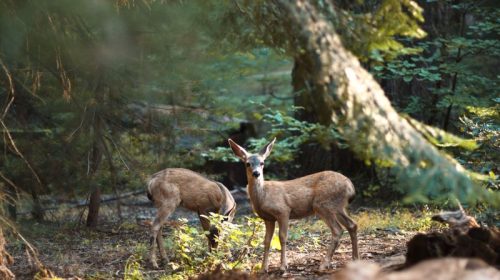
Wildlife has a tunnel under Highway 17 at Laurel Curve. The animals chose the location. Years of camera surveys, roadkill records, and collar data showed where they were already trying to cross, and the Land Trust of Santa Cruz County, Caltrans, the UC Santa Cruz Puma Project, and Pathways for Wildlife built there. A bobcat used it within hours of the first cameras going in.
The Santa Cruz Mountains hold about as many lions as the range can support, but the animals are increasingly closely related. Without new lions arriving from other ranges, inherited defects that would stay rare in a larger population start appearing. The tunnel itself is a short piece of concrete. What ends the isolation is lion country on both sides of the highway, now joined. In a Southern California study, one lion crossing has been enough to change the genetics of an entire population.
What a Corridor Actually Is
The Highway 17 crossing is a corridor at its largest. A corridor is habitat, not a path through it. It has to hold what each animal using it needs, and connect to habitat at both ends. What counts as a gap is set by the animal, not by the map. A gap a bird crosses without noticing can stop an animal that walks.
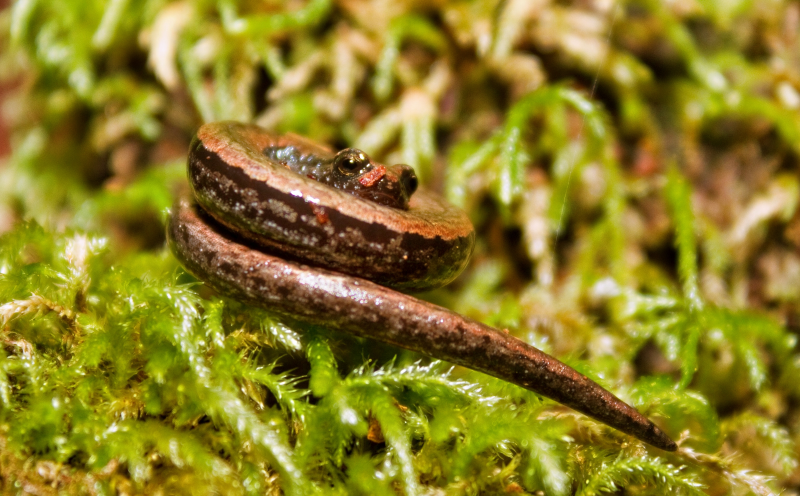
California Slender Salamander (Batrachoseps attenuatus). Photo: Brian Gratwicke
A California Slender Salamander spends its life within a few feet of the log it hatched under. Measured over two years, their movement averaged five feet. The species has among the smallest home ranges of any vertebrate. The young settle close to where they hatched, so the population can only grow into ground that is already damp, littered, and shaded. Where that ground stops, so does the salamander.
What We Have That Most Places Do Not
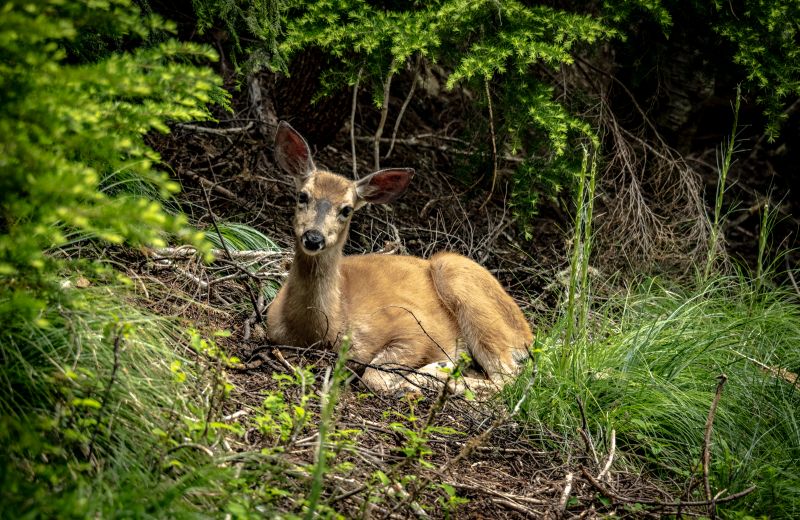
In the Santa Cruz Mountains, the forest is the continuous ground, and our houses are the holes punched into it. Big Basin, Henry Cowell and Fall Creek are unbroken blocks of forest, thousands of acres each. The San Lorenzo River and its creeks connect the length of the valley.
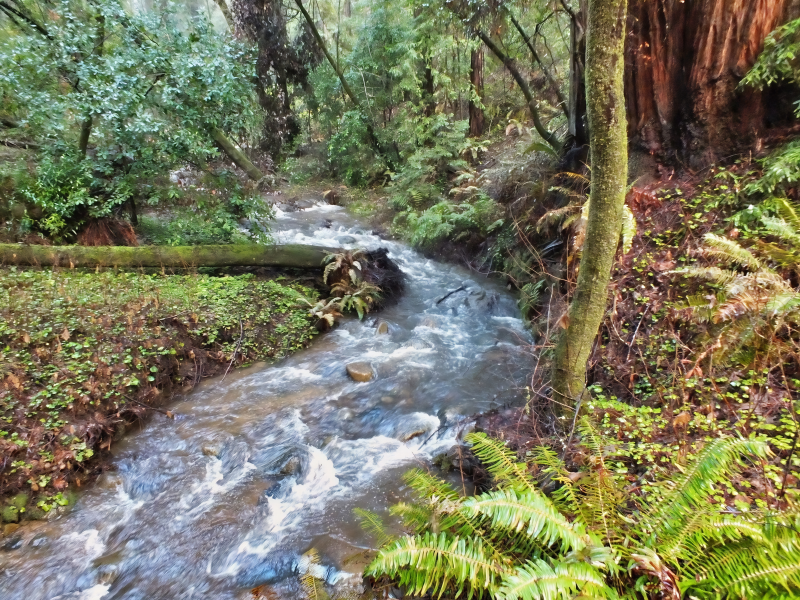
Creeks and their forested edges form natural corridors through the San Lorenzo Valley, connecting native wildlife habitat. Photo: Fred McPherson
Unbroken forest and connected creeks are what make a small planting worth doing. Cleared ground only fills in with what can reach it. In South Carolina, an 18-year experiment tested what happens when corridors of native plants join isolated habitat patches. After eighteen years, the connected patches held 24 more plant species than the isolated ones, carried in by birds, ants, and wind. The isolated patches lost species and never got them back.
What we have to work with is a degraded forest. Second growth where old growth stood, understory worn thin by a century of use, and edges taken by non-native French Broom, ivy, and Vinca. These three do not fragment the forest. They degrade it from the inside. They spread along the same creeks and forest edges that make this valley worth defending.
Where the Work Starts
Start by taking the broom, ivy, and vinca off the edges of your own ground. A mat of ivy or vinca between two good yards is the gap. Native regrowth can take years on its own. Plant the cleared space with natives indigenous to the SLV. Put the wood and leaf litter back where the salamander can use it.
Work outward from there, toward where your property meets the next. Then toward the creek or the forest if either is close. Enough of that work, on enough properties, and the ground between Big Basin and Henry Cowell becomes something an animal can cross. Corridors through our neighborhoods begin one restored edge at a time.
Have an article to share? The San Lorenzo Valley Post welcomes your Santa Cruz Mountains news, story ideas, and photos. Send us an email.
Sign up for our newsletter to stay connected to news and events in the Santa Cruz Mountains.
Linda Skeff
Linda Skeff is Program Director of the SLV Native Habitat Restoration Program, a program of the Valley Women’s Club, and Chair of the Native Habitat Committee. She was the 2019 San Lorenzo Valley Chamber of Commerce Woman of the Year. For habitat gardening resources, upcoming events, and to sign up for the monthly newsletter From the Ground Up, visit slvhabitatrestoration.org.