Spicy Fermented Honey
By Thomas Andersen
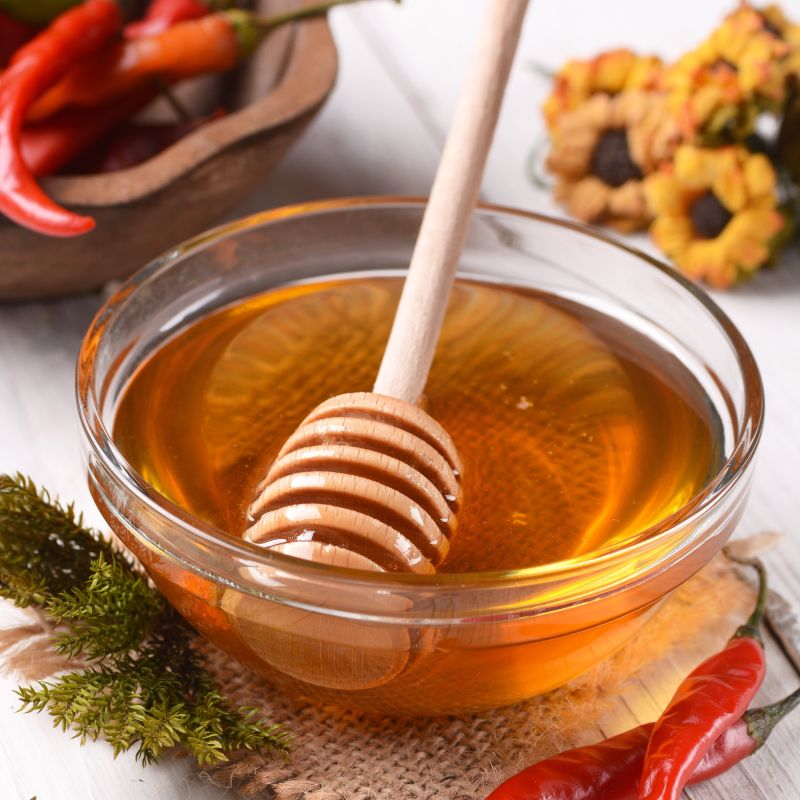
Of course most of us think of the Viking mead when there is mention of fermented honey. Mead, if you have never had it, is a little sweet and quite complex in flavor because honey itself is as varied as the pollen from which it is made. It can also be quite potent, beyond 15% alcohol even. Great stuff, but if you don’t have friends with bees or an ample hive yourself, it can be pretty pricey to make and it takes six months to a year to really get the most out of it. Maybe we’ll make it sometime. Just writing about it makes me thirsty, but not this month. This month we are going to make fermented hot pepper infused honey. I got the idea from a chef who drizzles it on his Chicken Fried Calamari — you have to try it. I mean it!
So, I brought up the idea with a bee keeping friend who informed me that honey needs water to ferment. Now, beekeepers actually fear water intrusion in the hive as it could ruin a year’s hard work for the little guys. Honey will keep indefinitely unless water gets into it. However, water added to honey will allow it to ferment. And that’s our goal here.
I guess fermenting stuff in honey holds sort of its own spot in the fermentation genre. It’s not really making alcohol, it doesn’t use a salty brine, it’s not quite like making a kombucha or a carbonated soda, it isn’t a multi part process like vinegar or sake and soy sauce. And it isn’t heated or sterilized like beer or wine. It is made at room temperature using the moisture from, in our case here, fresh peppers and the natural yeasts provided on the peppers and probably the feet of the bees. It’s okay, they mostly only land on flowers…
All that being said, it is really simple to make. For hardware all you need is a sanitized quart jar and spoon (one gallon of water with one teaspoon of bleach then one teaspoon of vinegar let it sanitize for one minute the pour it back into the container for reuse), a clean cloth or a jelly bag to keep out the bugs, and a rubber band. You’ll need one quart of raw unpasteurized or heated honey. Finding a local source is best. Camp Joy in Boulder Creek is a good place to start but there are quite a few local backyard beekeepers who might trade you for something. Then one jalapeno, two habaneros, and one serrano will probably do it. If you like your ears to sweat, double the habaneros and keep the seeds and membranes. If you like it a little sweet, add a piece of bell pepper.
Chop up everything into 1/4 inch bits. Keep or remove the seeds and membranes at your discretion. Put them into the sanitized jar. Mash the peppers a bit in the bottom of the jar in order to release some moisture. Add the honey leaving at least one inch of space at the top. Stir it up with a sanitized spoon and put the cloth and rubber band on it. Put in a spot that will stay around 70 degrees and out of the sun. Give it a shake every day for the first few days to keep the peppers covered. It should start to bubble in a couple days. In ten to 14 days, it will be ready to use. You’ll notice it getting a little thin and decrease in volume. Give it a try. If it’s right, put a lid on it and keep it in the fridge. By the way, lots of people ferment garlic in honey. I haven’t tried it, but it sounds great.
Fried Calamari Steaks with Fermented Honey
4 calamari steaks
1 beaten egg
1 cup milk
1 cup flour
½ cup panko or breadcrumbs
1 tsp cracked pepper
½ tsp paprika
Pinch of cayenne pepper (a multitude of peppers can’t possibly be bad)
Pinch of salt
In a medium sized bowl, mix the beaten egg and the milk. On a plate, mix everything except the panko or breadcrumbs. They go on another plate. Coat the steaks with the flour mixture then dip each side into the egg sauce then into the panko. Fry them in a medium hot (350 F) skillet with about 1⁄4 inch of oil for about two and a half or three minutes on each side. Drain them for a minute then drizzle a tablespoon of the honey and a few of the pepper bits on each. Approach carefully or dig right in. If you are old enough, have a cold homebrewed beer at the ready. The fermented honey goes great with Allison Steele’s cornbread as well (slvpost.com/three-sisters-cornbread).
Spicy Bee’s Knees Cocktail
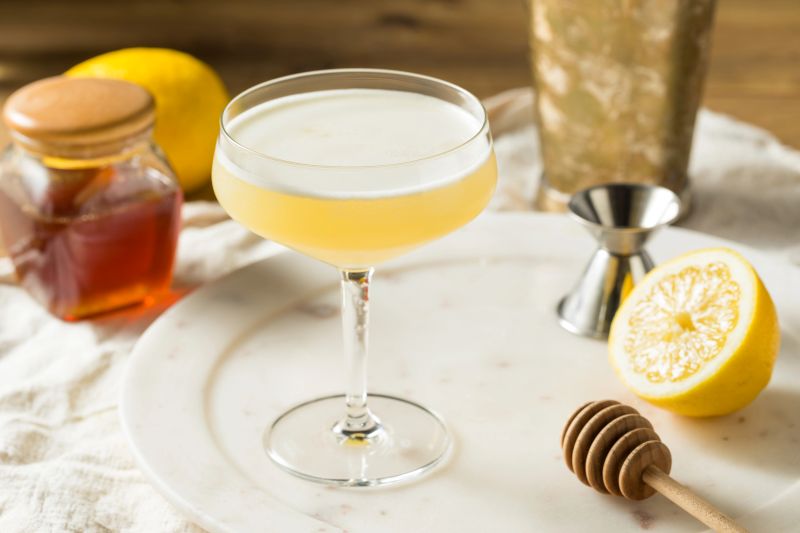
Spicy fermented honey can be used in cocktails in place of simple syrup if you want a peppery kick. Think margaritas, palomas, sangrias, and gimlets.
Here’s a spicy twist on a Prohibition era cocktail — the Bee’s Knees. The standard uses gin, lemon juice, and honey syrup. Use a dry gin or select a citrus or floral flavored option. To help the sticky honey blend more easily, mix water and honey to create a honey simple syrup.
Serves 2
Simple Syrup: ½ c water and ¾ c honey
3 oz your favorite gin
1 ½ oz freshly squeezed lemon juice
Garnish options: lemon rounds, peppers, crystalized ginger
Make your honey simple syrup by heating the water and honey in a small saucepan. Simmer for 5 minutes. Allow to cool.
Combine gin, 2 oz of the honey syrup, lemon juice, and ice. Shake in a cocktail shaker, then strain into a coupe glass. Garnish with lemon and peppers.
Tom Andersen is a writer, cook, martial arts instructor, and lifelong Felton resident. He explores the world of fermented food and drinks in print and online at FB @FeltonFementer.

Thomas Andersen
Tom Andersen is a writer, cook, martial arts instructor and lifelong Felton resident. He explores the world of fermented food and drinks in print and online. Tom lives in Felton with his family and many pets. He is currently working on a cookbook about fermentation.